2 Weeks No Fap: What's Happening to Your Body and Brain Right Now
Two weeks of NoFap is when most guys either break through or give up. Here's what's happening in your brain and why it's worth pushing past.


Obex
Obex Team
Two weeks in, and you might feel worse than you did on day one.
No energy, no libido, kind of numb. You’re wondering if this is even working or if you’ve somehow made things worse. You haven’t. Let’s break down what’s going on.
You’re Probably in the Flatline
The flatline is the phase nobody warns you about properly. It usually shows up somewhere between days 10 and 21, and it’s one of the main reasons people quit when they were actually close to a real turning point.
Your brain spent years being flooded with dopamine from artificial stimulation. When you cut that off, your dopamine system doesn’t just bounce back immediately — it recalibrates. During that recalibration, everything feels flat. Low libido, low motivation, low energy. Things that used to excite you feel kind of meh.
This isn’t a sign something is broken. It’s the opposite — your brain’s reward system is actively adjusting. The numbness is a phase, not a destination.
If two weeks in feels harder than day one, that’s the flatline. It’s uncomfortable, but it’s your brain doing exactly what it needs to do.
What’s Happening Neurologically
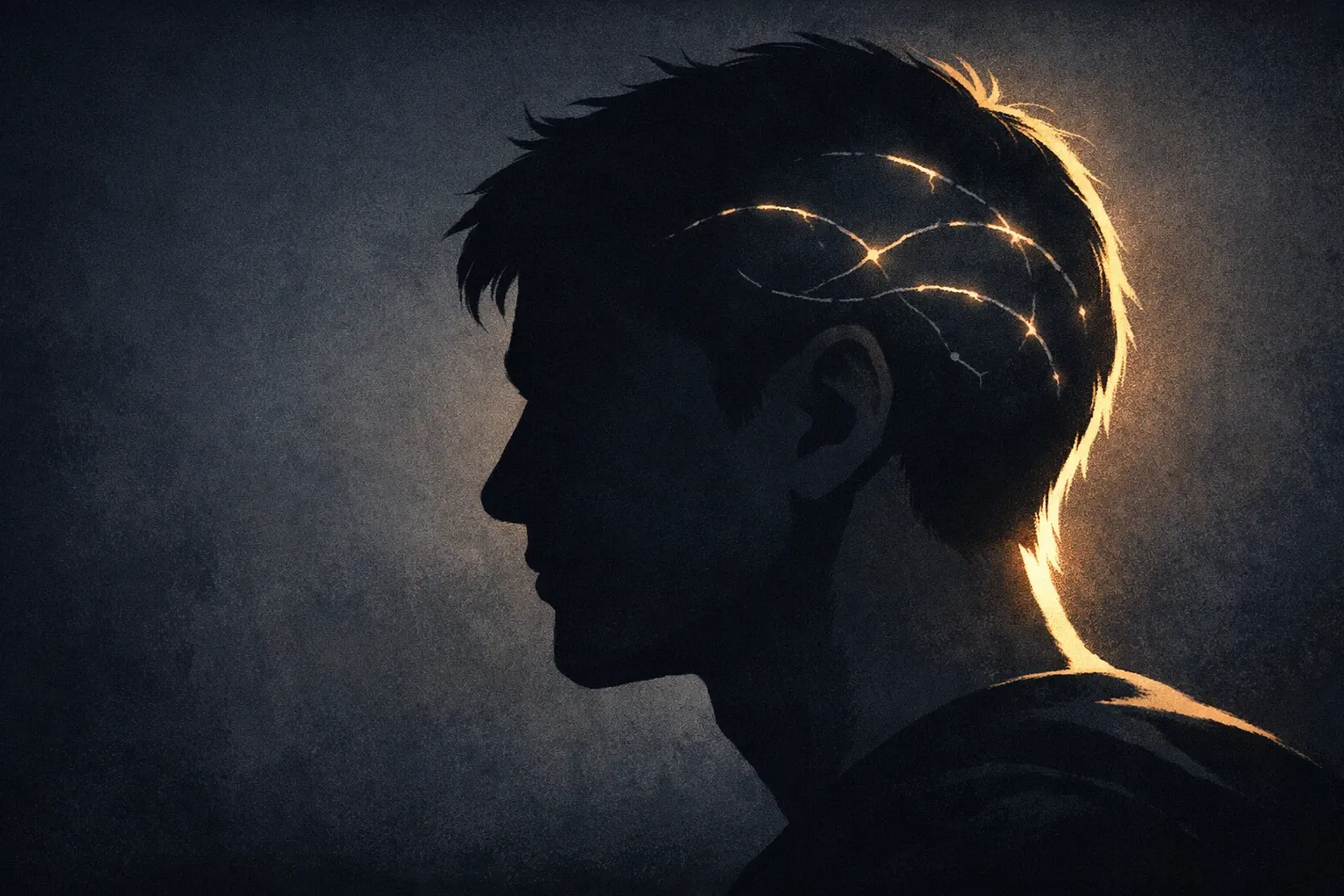
At two weeks, your dopamine receptors are starting to recover their sensitivity, but they’re not there yet. Think of it like this: you’ve been blasting loud music for years, and your ears adjusted by going partially numb. When the music stops, silence doesn’t sound like silence right away. It takes time for your hearing to come back.
Your prefrontal cortex — the part responsible for impulse control and long-term thinking — is also starting to come back online. It was being overridden regularly by dopamine-seeking behavior. As that pressure decreases, you’ll think more clearly and make decisions that are more aligned with what you actually want.
At day 14, you’re in the middle of that transition. That’s why it feels uncertain.
Physical Symptoms at Two Weeks: What’s Normal and What’s Not
Your body is adjusting too, not just your brain. Here’s a rough checklist of what guys commonly report around the two-week mark.
Normal at day 14:
- Occasional headaches, especially in the first few days
- Sleep disruption — falling asleep later, waking up earlier, or having vivid dreams
- Irritability and mood swings that come and go without a clear trigger
- Brain fog that makes it hard to concentrate for long stretches
- Fatigue even when you’ve slept enough
These are withdrawal symptoms. They’re uncomfortable, but they pass. Most guys see them ease up significantly by week three or four.
Talk to a doctor if you’re experiencing:
- Severe, persistent headaches that don’t respond to hydration or rest
- Chest pain or heart palpitations
- Prolonged insomnia (multiple nights with almost no sleep)
- Depression that feels unmanageable or includes thoughts of self-harm
NoFap doesn’t cause those things directly, but stress and disrupted routines can surface underlying issues. Don’t tough it out if something feels seriously wrong.
Your Sex Drive Might Be Doing Weird Things
Here’s where it gets confusing: at day 14, guys are in completely different places with their libido, and both extremes are normal.
The zero-libido camp. Some guys have almost no sex drive at two weeks. Nothing turns them on. Morning wood is gone. They feel like they’ve broken something. This is the flatline in full effect, and it doesn’t mean you’ve damaged yourself. Your brain is recalibrating what arousal even means without the constant artificial input. It comes back. For most guys, it starts returning between weeks three and six.
The surging-libido camp. Other guys feel like their sex drive has gone into overdrive. Every attractive person on the street is distracting. The urges are constant and intense. This is also your brain recalibrating — it’s looking for the dopamine hit it lost and turning up the volume on your natural drive.
If you’re in the flatline group, don’t panic. It’s temporary. If you’re in the surging group, you need a plan for the urges — leave the room, do pushups, call someone, go outside. Having a default response ready before the urge hits is the difference between managing it and relapsing.
What You’ll Probably Notice at Day 14
Some of what people report at the two-week mark:
- Better sleep. For many, this improves in the first two weeks even if everything else feels flat
- Clearer mornings. Less of that groggy, heavy feeling after waking up
- Slightly sharper focus. Not dramatic, but noticeable
- Reduced anxiety. Or the beginning of it, even if it’s subtle
The emotional numbness gets most of the attention because it’s uncomfortable. But a lot of low-grade improvements are already happening in the background by day 14. You might not notice them until you’re further along and look back.
One guy in Gary Wilson’s Your Brain on Porn described it this way:
“”“Around the month mark I started feeling significantly better about myself and things began falling into place effortlessly; people seemed better disposed towards me, my body language improved, I started joking around at work more and generally seeing the lighter side of life.”
That’s what’s on the other side of the flatline. You’re not there yet at day 14, but you’re building the foundation for it.
How to Get Through It
This is the phase where accountability matters more than willpower.
Willpower gets depleted by decision fatigue, stress, and boredom. The flatline is basically a combination of all three: low motivation, uncertain progress, and a lot of moments when the pull back toward familiar behavior is strong precisely because you’re not getting dopamine rewards from anything right now.
What actually helps:
- Keep the streak visible. Having a counter you can check is a small thing that matters more than people expect. The number has weight.
- Get physical. Exercise is one of the most direct ways to get a natural dopamine hit. It doesn’t have to be intense. Even a walk changes the state.
- Don’t white-knuckle alone. Tell someone where you’re at. An accountability partner who knows you’re in week two will check in. That check-in can be the difference between a relapse and day 15.
- Stay busy with purpose. Idle time is the most dangerous time in the flatline. It’s not enough to avoid porn — you need to be actively doing something.
Should You Tell People You’re Doing This?
Short answer: tell one or two people, max.
You don’t need to announce it on social media or bring it up at dinner. Most people won’t understand, and explaining it turns into a debate you didn’t sign up for.
Pick one or two people you trust — a close friend, a partner, maybe a therapist — and make them accountability partners, not an audience. The goal is having someone who’ll check in on you and who you can text when things get hard. That’s it.
Accountability works best when it’s specific and private. “Hey, I’m trying to quit porn, can I text you when I’m struggling?” is infinitely more useful than a vague Instagram story about self-improvement.

Signs You’re Past the Worst of It
Most people start to turn a corner somewhere between day 14 and day 21. The signs aren’t dramatic, but they’re real:
- Morning wood returning (if it was absent)
- A genuine interest in something outside yourself — a project, a person, a goal
- Less mental noise about the habit
- Energy that doesn’t feel forced
When these start showing up, even slightly, it means the recalibration is working. You’re not done, but the hardest stretch is behind you.
Why Two Weeks Is Worth Protecting
Day 14 isn’t just two weeks. It’s the foundation that makes day 30, day 60, and day 90 possible.
Every relapse sends you back to day one, and more than that, it resets the neurological progress your brain has been making. The recalibration doesn’t start where you left off. You lose ground.
Two weeks of progress is genuinely meaningful. The flatline is temporary. The discomfort you’re feeling right now is your brain working, not failing.
If you can get to day 21, the shift usually becomes more apparent. If you can get to day 30, you’ll wonder why you ever thought this wasn’t working.
Obex tracks your streak and pairs you with an accountability partner who actually checks in. If you’re at two weeks and want to make sure you don’t lose it, that’s what it’s built for.