Why Accountability Works Better Than White-Knuckling
White-knuckling porn recovery usually breaks under stress. Accountability creates visibility, interruption, and follow-through that lasts longer.


Obex
Obex Team
White-knuckling is how most guys try to quit porn at first. Usually right after a relapse, you make a private promise, decide this time is different, and plan to beat every urge on your own by gritting your teeth.
It feels strong for the first few days. Then you have a stressful week, or you’re lonely or exhausted or ashamed about something, and the promise falls apart, because nobody else knew about it and nothing about your setup changed. Accountability fills a lot of that gap. This post covers why going it alone keeps breaking down, what accountability does, how to set it up with one person, and how to use it after a relapse.
White-knuckling fails for predictable reasons
Trying to quit porn alone usually breaks down because:
- there’s nothing between the temptation and the action
- secrecy makes relapse easier to explain away
- shame grows faster when nobody knows the truth
- motivation drops, but nothing else about your setup changes
You can mean it completely and still not have what you need to pull it off. That’s a problem with the strategy, and it doesn’t say anything bad about your character. You’re up against a pattern you’ve repeated a lot, with nothing outside your own head helping you.
What accountability actually does
Accountability sounds like someone checking up on you, and that’s part of it, but the useful parts are more specific. Mostly it does four things:
- Someone else can see what’s going on, so it’s harder to drift without noticing.
- The gap between an urge and being honest about it gets way shorter.
- Secrecy loses a lot of its power.
- Recovery becomes something you’re doing with someone, instead of a private drama in your own head.
This week, tell your person where you usually slip and agree on when you’ll check in.
Accountability is strongest when it’s specific
Vague accountability usually fades out pretty fast. If the setup is “let’s just check in sometime,” check-ins only happen when you feel motivated, which defeats the point.
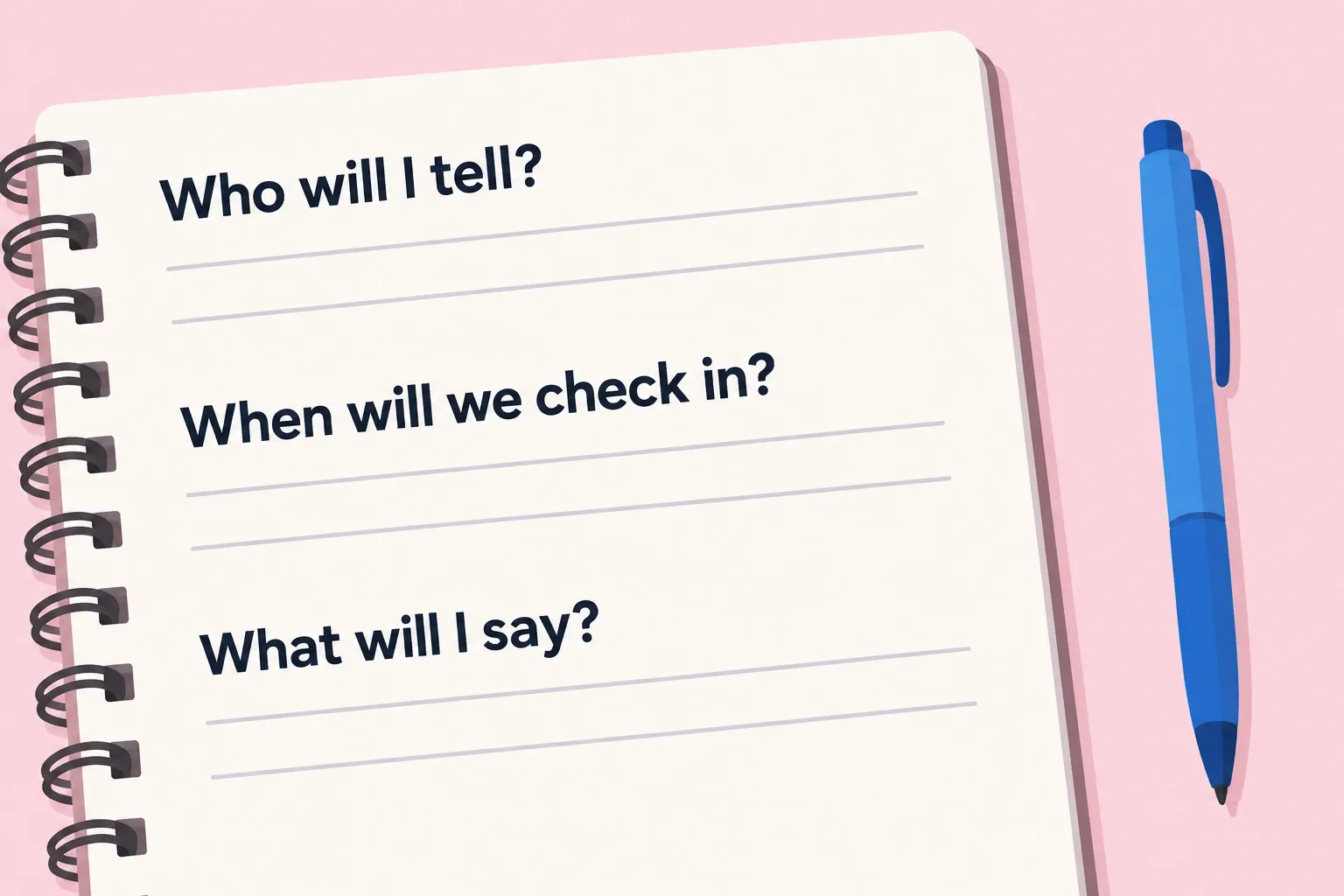
A better setup is simple and specific. Start by answering five questions:
- Who’s your accountability person?
- When do you check in?
- What do you say when an urge hits?
- What do you say after a relapse?
- What kind of honesty is expected?
A good baseline looks like this:
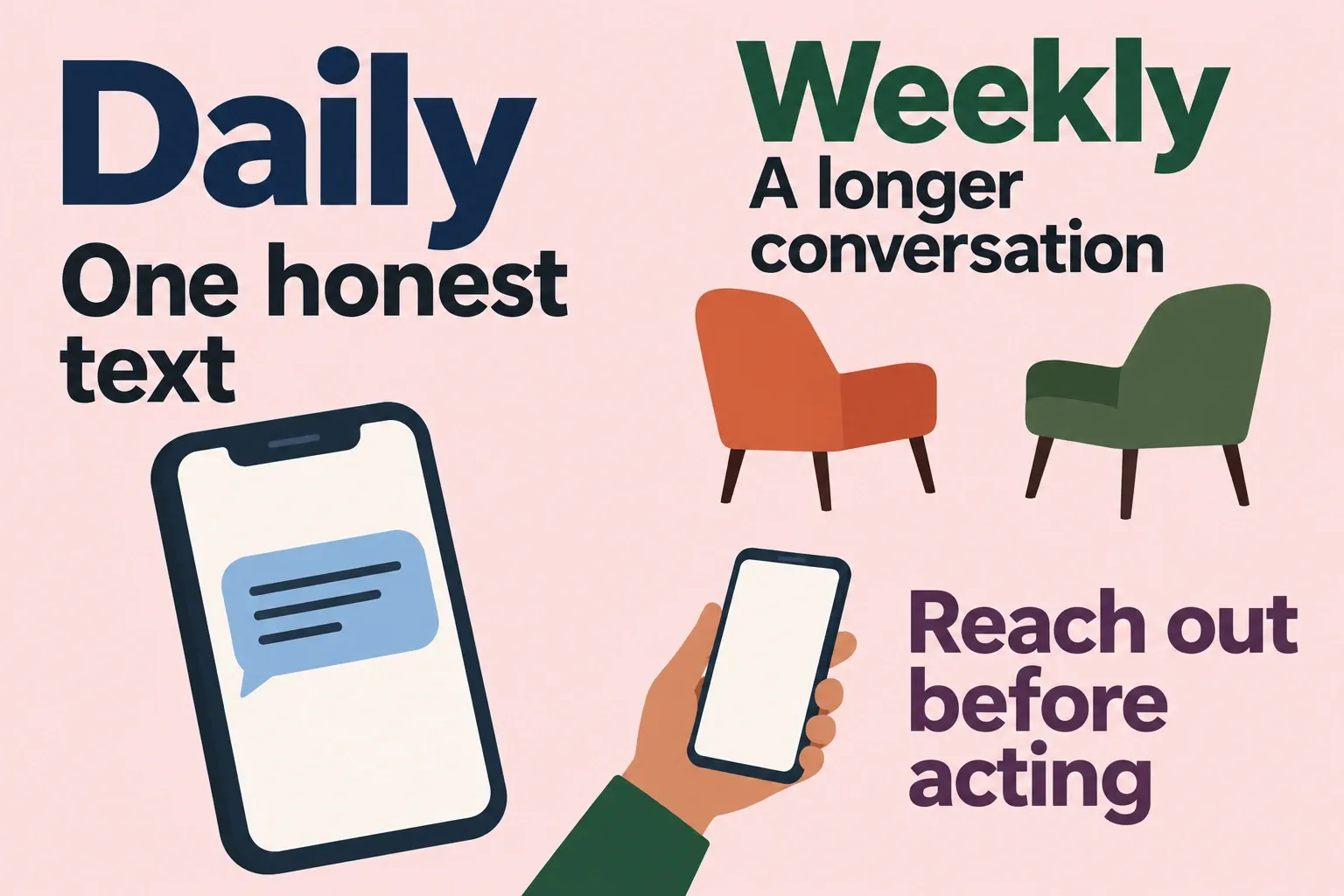
- one short daily check-in, even a single text
- one longer conversation a week
- one message whenever you’re in a high-risk moment
- one honest reset message if you relapse
That’s enough to create real pressure without turning it into a full-time job.
You don’t need dramatic honesty
A lot of guys avoid accountability because they picture every conversation being intense or embarrassing, and it’s usually a lot more normal than that. Most check-ins look something like this:
- urge is high tonight, stepping away from my phone now
- rough day, I can feel the pattern starting
- relapsed, reviewing what led up to it and resetting tonight
Those work because they’re short and honest, and nobody has to turn them into a big emotional moment.
Accountability works best with friction
Accountability helps a lot, and it works even better alongside changes to your environment. If you’re sending check-ins while still keeping unrestricted access to the exact apps and devices that keep taking you down, you’re making this way harder than it needs to be.
The best setup combines:
- visible tracking
- honest check-ins
- blockers or filters
- clear routines for high-risk moments
Accountability is one part of that setup, and it does its best work when the other parts are there too.
What if you don’t have the right person yet?
Start smaller than you think you need to. On day one you need someone trustworthy enough to begin with, and they don’t have to be a perfect mentor:
- a friend who takes your goal seriously
- a pastor or leader who’s steady and discreet
- a small group leader
- a sibling or family member if the relationship is healthy
At the start, checking in consistently and being honest counts for more than finding the ideal person.
Accountability after relapse matters most
A lot of guys go silent after a relapse because they feel stupid, ashamed, or tired of repeating themselves, and that silence is exactly what keeps the pattern going.
Right after a slip, you’ll probably want to hide instead of telling anyone. Getting honest fast cuts off the isolation that turns one bad moment into a longer spiral. So if you relapse, tell your person quickly, even though you’d rather hide until you feel respectable again, then figure out what led to it and change the next step.
Discipline grows better in the open
A lot of guys treat accountability like the opposite of discipline, as if needing someone means you’re weak. It’s closer to the other way around, because accountability is one of the things that helps discipline survive real life. It keeps what you care about in front of you on the days your mood is bad.
With porn that’s a big deal, because the habit does best when it’s secret, easy to get to, and you’re drifting emotionally, and bringing another person in messes with all three.
The better question
Instead of asking yourself:
“”Shouldn’t I be able to beat this on my own?
try asking:
“”What kind of structure gives me the best chance to keep going when I’m not at my best?
The second one is a more honest question, and it’s more useful, because it has real answers like one person, a check-in rhythm, and a couple of blockers.
If a setback already happened, use the immediate plan in what to do after a porn relapse. For the longer-term setup, keep going with how to quit porn forever.
If you’re ready to bring someone in, Obex gives you daily check-ins, an accountability partner to reach out to, and Panic Mode for the high-risk moments.