NoFap Hard Mode: Rules, Benefits, and Who It Is For

Luca
Updated · 9 min read
If you’ve been in NoFap spaces for a while, you’ve seen guys say they’re going hard mode, and it’s easy to start wondering if regular NoFap is kind of the soft option. NoFap hard mode means no porn, no masturbation and no orgasm at all for a set period of time, and that includes sex with a partner.
For some guys that extra restriction really helps, and for others it mostly adds drama. Whether it’s worth it for you comes down to whether it fits the problem you’re trying to fix. Here’s how the rules work, how hard mode compares to standard NoFap, who it suits and who it doesn’t, the downsides, and how to try it without burning out.
The NoFap hard mode rules
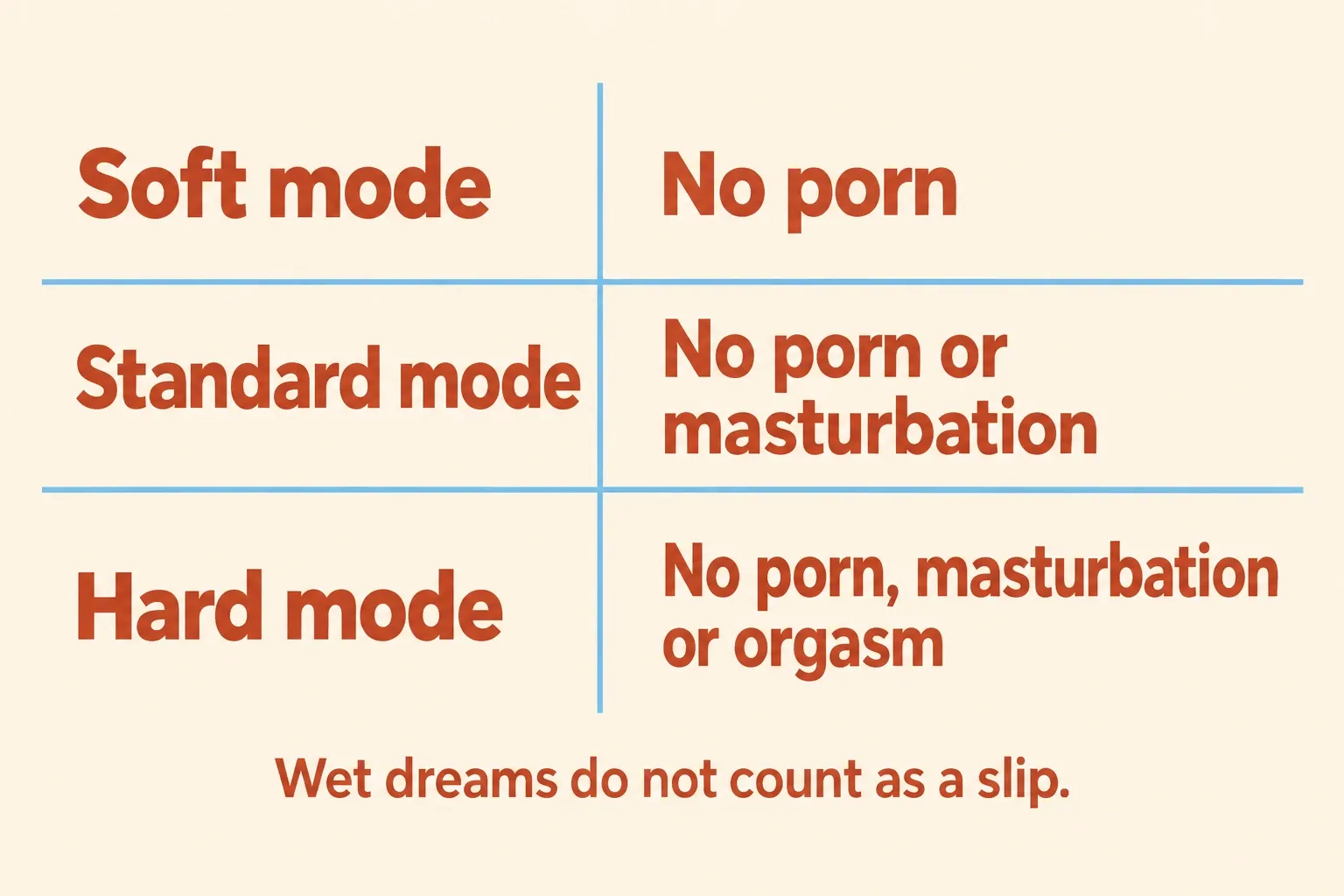
People use the terms pretty loosely online, so here’s how they usually break down:
- Soft mode: no porn, but masturbation or sex may still be allowed
- Standard NoFap: no porn and no masturbation, but sex with a partner is allowed
- Hard mode: no porn, no masturbation, no orgasm at all
Wet dreams don’t count as a slip in any version, since you don’t control them (more on wet dreams).
If your issue is mainly PMO, standard NoFap is often enough. Hard mode makes more sense when you want a really clean reset and gray areas keep turning into loopholes.
Hard mode vs standard mode
The difference on paper is one rule, but it changes a lot in practice:
- Sex with a partner. Standard mode allows it and hard mode doesn’t. If you’re married, that’s the big one, and it isn’t your call alone (more on that below).
- Gray areas. Both rule out porn and masturbation, but hard mode also ends the “it doesn’t count if…” arguments, because no orgasm of any kind is allowed.
- How long it lasts. Guys often keep standard NoFap going long term. Hard mode is usually a defined experiment, often 30, 60 or 90 days.
- How it feels. Guys on hard mode often describe stronger urges and more sexual dreams early on, and because the rules are stricter, a slip can feel worse.
Pick the one you’re more likely to stay honest and consistent with. That matters way more than which one sounds tougher.
Who hard mode is for
Where it tends to fit
Hard mode tends to fit best when the problem is broad. It’s often a good option if:
- you keep turning “safe exceptions” into relapse fuel
- sexual cues and routines in general keep pulling you back right now
- you want a defined reboot period with as little ambiguity as possible
- you’re single, so the practical difference from standard mode is small
- your pattern is compulsive enough that having zero gray area feels easier than trying to moderate and failing
For a lot of guys, the hardest part of recovery is all the bargaining that happens in their head before porn even comes up, and hard mode can shrink the room for that bargaining. That’s pretty much its biggest strength.
Probably not the place to start
This is where guys often overreach. Hard mode is usually a weak starting point if:
- you’ve never built a stable first streak
- you’re picking it because internet culture made standard mode feel “soft”
- you’re married and the reason is reboot benefits (see the note on 1 Corinthians 7:5 below)
- your issue is clearly porn, and sex or orgasm itself isn’t part of the problem
- you tend to swing into all-or-nothing mode and then crash
If standard mode would already solve the problem, hard mode may just add tension and more ways to feel like a failure.
Why guys choose hard mode
The appeal is pretty obvious, because hard mode removes the negotiation. There’s no “just this once”, no “it doesn’t count if…”, and no dancing around the edges of the same loop while telling yourself you’ve changed.
Guys usually pick it because they keep relapsing through small exceptions, they’re worried about PIED or feeling less responsive with a partner, or they just do better with clean rules than fuzzy ones. What they’re hoping for is fewer loopholes, less edging, a stronger break from fantasy, and a cleaner reset for their libido.
Some guys really do find the clarity helps a lot. Once the rules are absolute there are way fewer decisions to make, and that can make recovery feel calmer instead of harsher. The benefit comes from having less to argue with yourself about. Making it harder on yourself doesn’t add anything on top of that. Hard mode is a stricter tool, and it doesn’t make you a better person than a guy doing standard mode.
What hard mode can and can’t do
The idea behind hard mode is to draw a really clear line around the cues and routines that keep pulling you back into compulsive sexual behavior. That can help in a few ways:
- it gives you a clean baseline
- it shows you how much of your behavior is driven by chasing arousal
- it stops loopholes like edging or fantasy spirals from hiding inside “technically I’m still on NoFap”
- it gives some guys a clearer mental break from the old pattern
It doesn’t create extra physical benefits just because it’s stricter, though. If your goal is body composition, the changes that matter are sleep, food, activity and routine.
Keep in mind that hard mode is a community rule set. Clinicians use terms like compulsive sexual behaviour disorder and problematic pornography use, and a systematic review of treatment studies found early evidence that therapy, especially CBT, helps, while calling for more rigorous trials. If your behavior feels out of control, causes you serious distress, or is damaging your relationship, a qualified counselor can help you build a plan that goes further than a streak.
The downsides of hard mode
Hard mode can also cause problems if it’s used badly.
It can become performative
Some guys start caring more about being a hard-mode guy than about actually getting free, and that usually leads to ego, secrecy and a weird kind of pressure.
It can make relapse feel catastrophic
If your whole setup is built on being ultra-strict, one slip can feel like everything collapsed. That all-or-nothing reaction often sets off a much worse binge than the original slip, and it’s common enough to have a name, the abstinence violation effect.
It can strain your relationship
If you’re in a relationship, hard mode affects more than you. Even if you have a good reason, your partner still has to live inside that decision with you, and if you haven’t talked it through clearly it can feel like rejection, punishment or distance.
If you’re married, Paul is direct about this: “Don’t deprive one another, unless it is by consent for a season, that you may give yourselves to fasting and prayer, and may be together again” (1 Corinthians 7:5). The pause he allows is one you both agree on, it’s short, and it’s for prayer. Going without sex to chase reboot benefits isn’t what he’s describing, so don’t add hard mode for that. You’re fasting from porn, not from your wife. If the two of you agree on a short season without sex for prayer and healing, set an end date and come back together.
It can hide the real work
A strict rule set can make you feel serious without fixing your triggers, routines, access or honesty. Accountability still matters, figuring out your triggers still matters, and hard mode doesn’t replace either one.
What to expect if you try it
The beginning is usually the roughest part. Common early effects:
- stronger urges
- more restlessness
- more frustration
- more sexual dreams
- more temptation to test yourself
After that, one of two things usually happens. Either the clarity settles you down and makes the whole thing cleaner, or the rules start feeling like a performance, way stricter than your problem needs.
Pay attention to which one you’re in, and judge it by whether you’re recovering more honestly and consistently, since hard mode can feel really intense without helping much.
How to try hard mode without burning out
If you try it, make it a defined experiment:
- pick a time frame
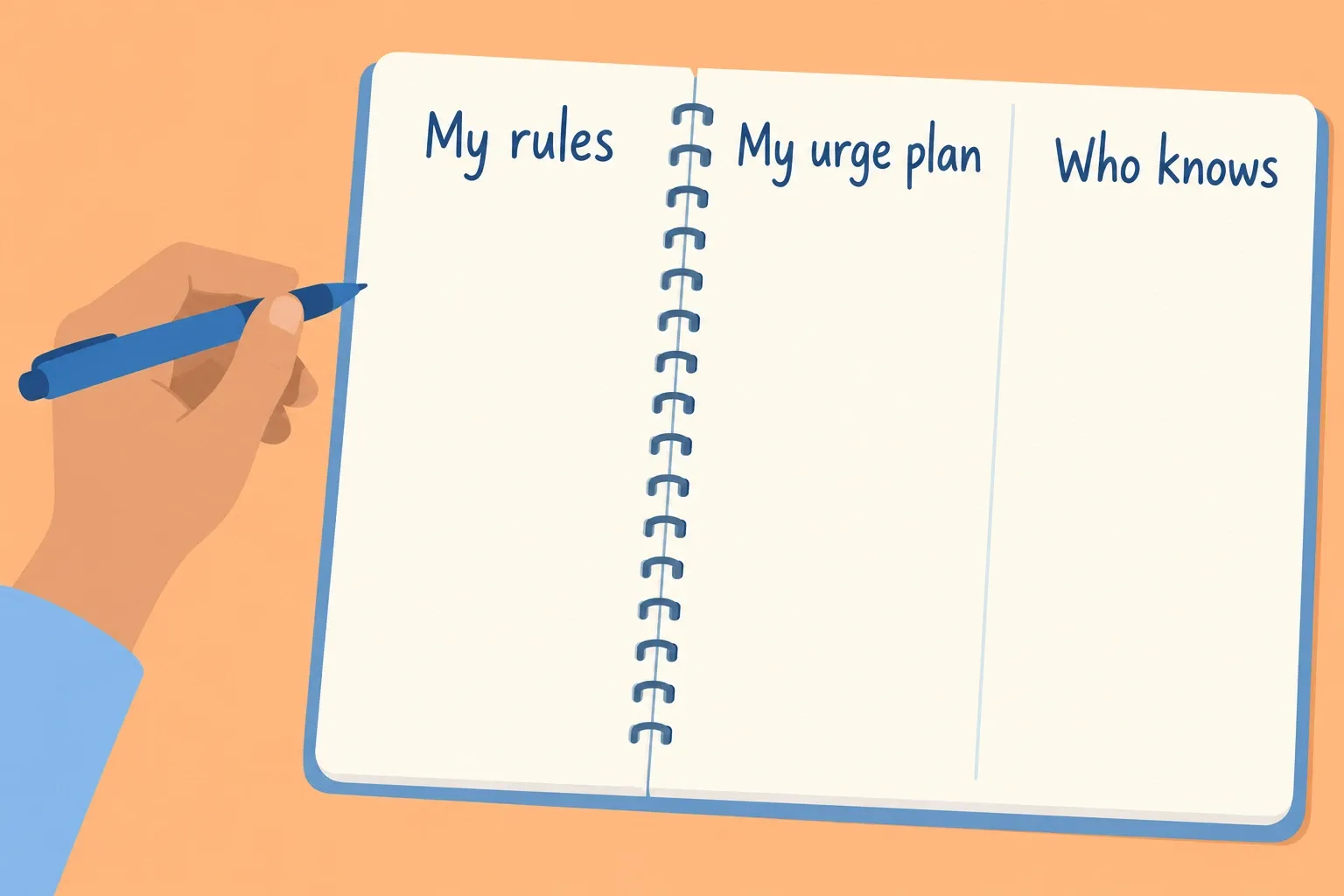
- write the rules down clearly
- decide what counts as a slip and what counts as a relapse
- remove obvious access points
- build an urge routine before you need it
- tell at least one real person, especially if secrecy is part of your pattern
A clear 30- or 60-day experiment with real structure will usually teach you way more than announcing “hard mode forever” on day one.
When you hit a really bad moment, use something practical like emergency urge help instead of giving yourself a dramatic speech in your head.
Frequently asked questions
How long should hard mode last?
A lot of guys treat it as a defined experiment, often 30, 60 or 90 days. A clear time frame usually works better than being vaguely strict forever.
Is hard mode good for PIED?
Some guys choose it while dealing with PIED because they want a completely clear break from porn and masturbation, but that doesn’t prove hard mode works better medically than a less strict plan. A lot of guys say their erections came back over a streak as the flatline lifted, and the PIED guide goes through what that usually looks like. If it hasn’t improved after a few weeks, get a quick check with a doctor, since erection problems can also come from physical causes like blood vessel problems or diabetes (NIDDK). Go sooner if you have diabetes, high blood pressure or heart disease in the family, or you smoke.
So is hard mode worth it?
It can be, but being stricter doesn’t automatically make it the smarter or stronger choice.
If the extra restriction gives you clarity, cuts off loopholes and helps you reset cleanly, it can be a really good tool. If it mostly creates ego, pressure or damage in your relationship, it’s probably the wrong tool, or the wrong timing. Whichever version you pick, it goes a lot better with a set time frame, one person who knows, and a plan for the bad nights.