Porn Addiction Triggers and the Routine That Breaks the Loop
Feels like porn comes out of nowhere? How porn addiction triggers work, how to spot yours early, and a five-minute routine for when an urge hits.


Obex
Obex Team
A lot of the time it feels like porn just comes out of nowhere. You’re fine all day, then it’s late, you’re in bed “just checking” Instagram, and somehow you end up exactly where you said you wouldn’t.
It’s almost never out of nowhere, though. Porn addiction triggers usually follow a pattern, and once you can see yours, it gets a lot easier to step out early. So this post is about mapping your own loop: how it usually goes, what counts as a trigger, a five-minute routine for when an urge hits, and a short weekly review that keeps the plan working. If you just slipped, start with what to do in the next 24 hours instead, and once you know your pattern, relapse prevention strategies turns it into a written plan.
How the loop usually goes
Porn use tends to follow the same loop:
- a trigger shows up
- your brain looks for relief, stimulation, or escape
- you move toward the easiest available source
- shame or exhaustion follows
- the shame becomes fuel for the next trigger
It’s tempting to fight it at step three, when you’re already reaching for the phone, and that’s the hardest place to win. It’s way easier if you learn to spot step one early and do something before the loop picks up speed.
What counts as a trigger?
A trigger is anything that makes acting out more likely, and it can be visual, emotional, social, or situational. Common porn triggers include:
- being alone late at night
- doomscrolling while tired
- stress after conflict
- rejection or loneliness
- social media content that nudges you toward fantasy
- finishing a hard task and wanting a reward
- feeling discouraged and wanting escape
It’s easy to only watch out for the obviously sexual stuff, like a certain account or a suggestive thumbnail, and miss pretty much everything else on that list. Even the WHO’s description of compulsive sexual behaviour disorder notes that people with it often act out when they’re feeling depressed, anxious, bored or lonely (ICD-11).
Pick the two things on that list that sound most like you. Those are the ones your plan needs to cover first.
The three kinds of triggers
It helps to split triggers into three kinds, because each one needs a different fix.
1. External triggers
These are the obvious ones, like certain apps, websites, accounts, rooms, or times of day. They’re usually the easiest to change, because you can remove them, block them, or stay away from them.
2. Internal triggers
These are feelings like stress, boredom, resentment, anxiety, and shame. You can’t block those with software, so you need a plan for what to do when they show up.
3. Transition triggers
These happen in the gaps between parts of your day:
- getting into bed
- getting home from work
- opening your laptop after dinner
- sitting in your car after the gym
Transitions are risky because you’re between things and kind of looking for what’s next, and if you haven’t picked something, the old habit usually picks for you.
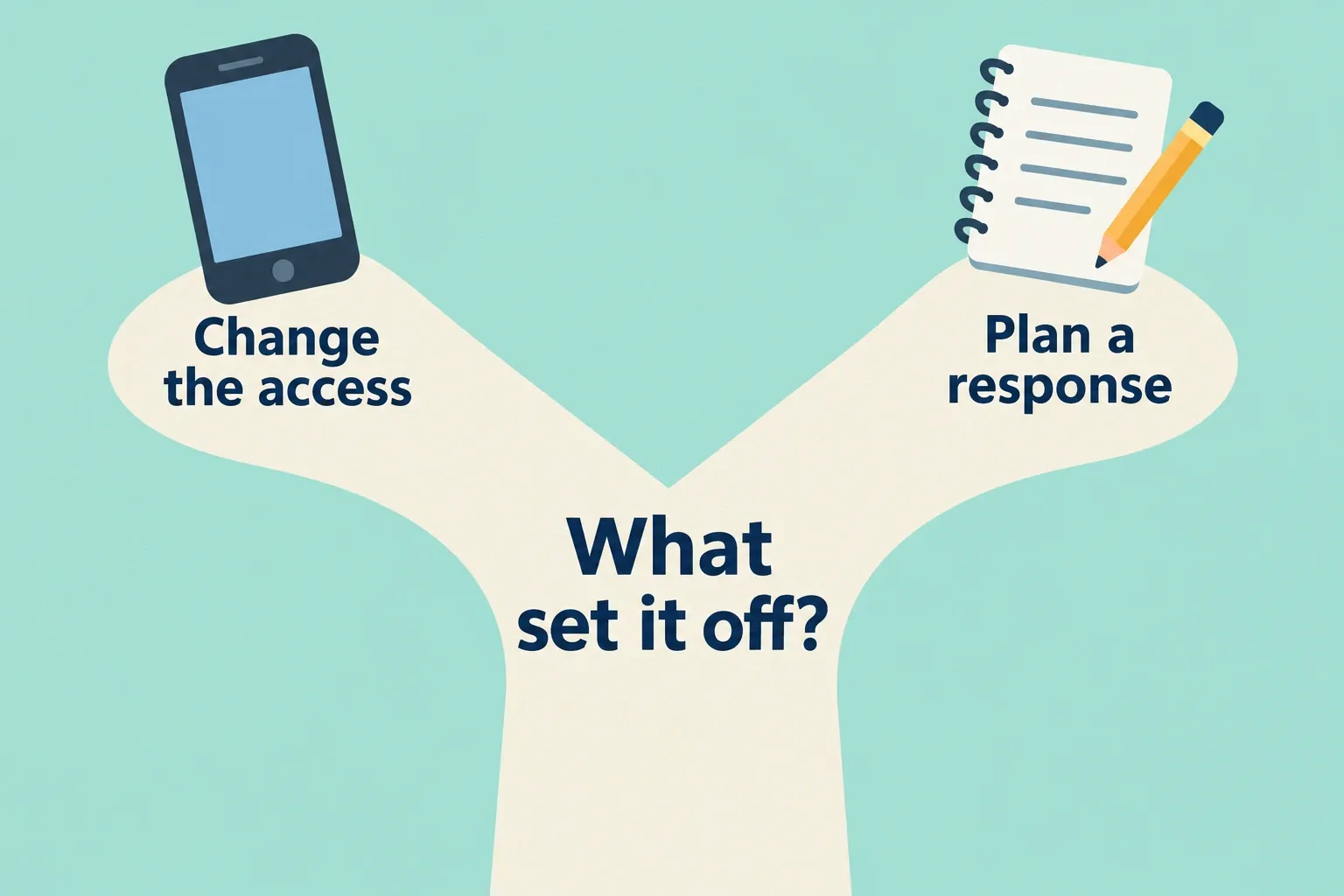
Build a “first five minutes” routine
When an urge hits, the job for the first five minutes is pretty small: get away from the device and get started on something else. Many people find urges ease within about 10–15 minutes of doing something else, so the routine only has to get you moving, and the task at the end carries you the rest of the way.
A solid first-five-minutes routine looks like this:
- Name the trigger out loud.
- Move your body immediately.
- Put physical distance between you and the device.
- Message someone or log the urge.
- Start a replacement task with a clear end point.
In practice, it might sound like this in your head:
“”I’m tired, alone, and scrolling, and I know where this goes.
Then:
- put the phone on a shelf outside the room
- wash your face
- walk outside for five minutes
- send a check-in
- do one concrete task like dishes, journaling, or tomorrow’s plan
None of this is exciting, and that’s kind of the point, because a boring response is one you’ll keep doing every time. On the really bad nights, the emergency urge plan walks you through it step by step.
Use routines that fit the trigger
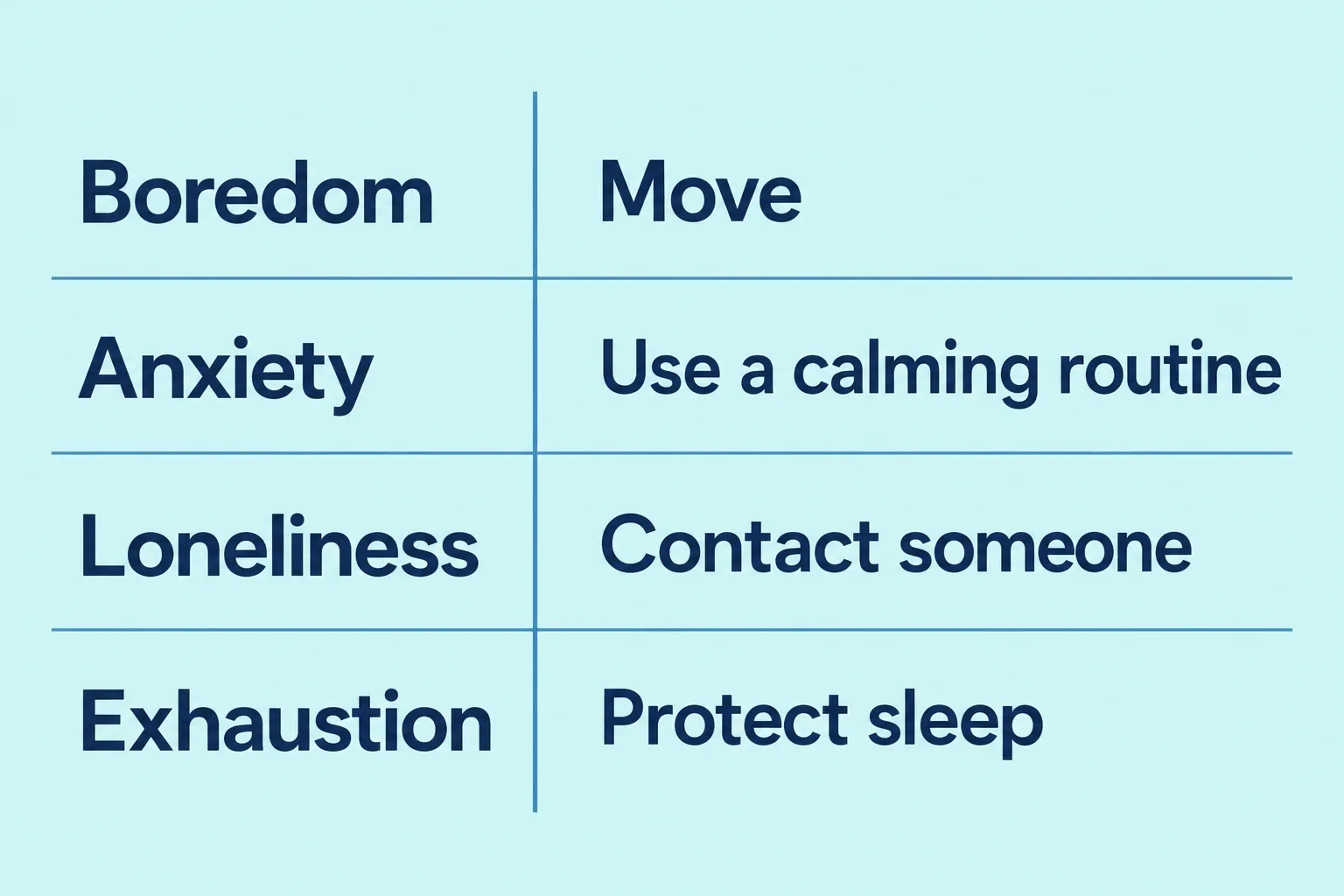
Different triggers need different responses:
- Boredom: you need something active to do.
- Anxiety: you need something that calms you down.
- Loneliness: you need real contact with another person.
- Exhaustion: you may need to stop pretending productivity is the answer and go to sleep.
That’s why one generic rule often fails. Two or three routines you’ve picked ahead of time, tied to the patterns you really have, will get you further.
Review the near-relapses too
If you only look back at full relapses, you miss some of the most useful information. If you opened the wrong app, scrolled longer than you meant to, or got close to acting out and stopped, look at that too. Ask yourself:
- what started the drift?
- where did I still have control?
- what helped me stop?
- what would make the interruption faster next time?
Doing this a few times makes your plan way more specific, and a specific plan helps more than just trying harder.
Replace shame with pattern recognition
Shame makes everything feel bigger and vaguer, like you’re just broken. Seeing the pattern turns it into something you can do something about. So instead of saying:
“”I keep messing up.
say:
“”Nighttime isolation plus stress plus my phone in bed is still my highest-risk pattern.
The second one is way more useful, because it tells you exactly what to change.
A ten-minute weekly reset
At the end of each week, take ten minutes and go through this:
- What were the top triggers?
- Which ones were predictable?
- Which routines worked?
- Where did I ignore early warning signs?
- What one friction point should I add this week?
You don’t need a fancy tracker for it. A notes app and being honest with yourself once a week is plenty, and if you have an accountability partner, it’s a good thing to go through on your weekly call.
Recovery gets simpler when the routine is ready
In the middle of a trigger you’re going to do whatever’s easiest and most familiar, so most of the work happens before the urge shows up:
- choosing what you’ll do
- reducing easy access
- preparing fast accountability
- rehearsing the response until it feels normal
Keep that up for a few weeks and a lot of guys find the loop gets noticeably weaker.
Write your five-minute routine on a card tonight and leave it where your biggest trigger usually happens, like on the nightstand or next to the laptop.
If you want the full system beyond triggers, read how to stop watching porn. It covers setting up your environment, accountability, handling relapses, and more.
When an urge hits in one of your windows, Obex has Panic Mode one tap away, with tools and Scripture for the next few minutes, and your daily check-ins and accountability partner are in the same app.