How to Stop Jerking Off: Breaking the Habit Without White-Knuckling It
Keep telling yourself it's the last time? Why willpower runs out, and how to set up your phone, room and nights so stopping jerking off gets way easier.

Obex
Obex Team
You’ve probably told yourself “ok, that was the last time” more than once, and meant it. Then a few days later it’s late, you’re in bed with your phone, and you’re right back there.
That doesn’t make you weak. A lot of guys trying to figure out how to stop jerking off are trying to beat a habit with willpower alone, and a habit doesn’t really care how determined you felt that morning. What works better is changing the setup around it: when it happens, where your phone is, what you do when the urge hits, and who knows about it.
So this is how to figure out what sets it off for you, how to make it harder to do on autopilot, what to do in the moment, and how to handle it when you slip.
What’s driving the jerking off habit
Before you try to stop, it helps a lot to know what’s setting it off. Urges aren’t random, they tend to show up in the same conditions again and again.
Be honest with yourself about these:
- What time of day does it usually happen?
- Where are you when it starts?
- What device are you on?
- What were you feeling in the 10 minutes before: stressed, bored, lonely, anxious?
- What’s the first step? (Opening a specific app, going to a certain website, lying in bed scrolling?)
The habit has a trigger, a routine, and a reward. To break it, you want to interrupt things at the trigger, before the routine gets going, because once you’re three steps in you’re pretty much on autopilot.
Naming your top two or three trigger windows will do more for you than any amount of general motivation.
Change your setup
The fastest path from urge to action is easy access, so the goal is to make that path slower.
You don’t need to do this perfectly. You just need enough friction between the impulse and the decision that the part of you that doesn’t want to do this gets a say.
Things that help:
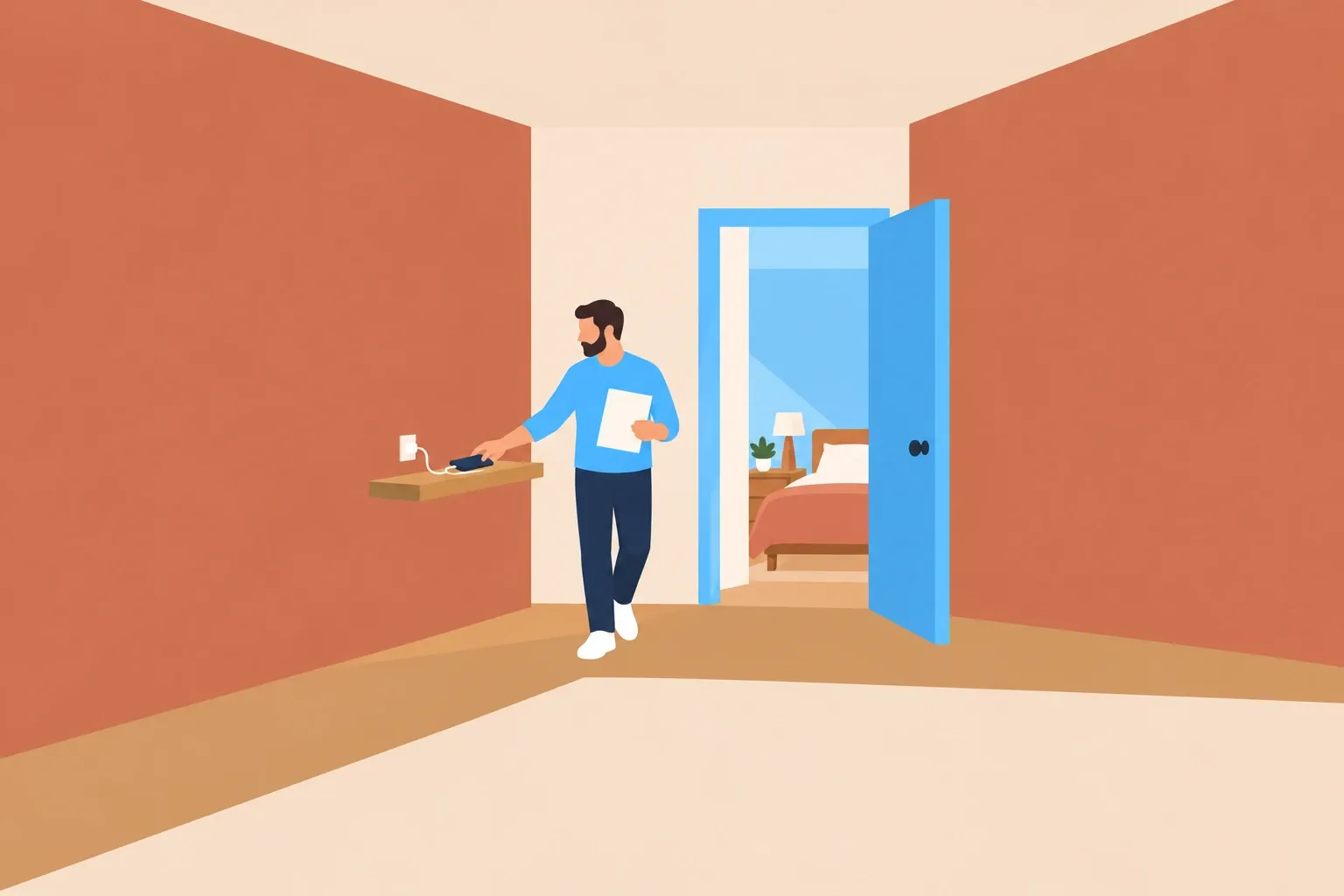
- Move your phone out of the bedroom. For a lot of guys this one on its own makes a huge difference.
- Put a blocker on the devices you actually use, meaning the one you’re always on, and the one you barely use too. On a Mac, Obex Desktop is a free blocker that works across every browser and app (it needs macOS 15 or later), and blocking porn on a computer covers Windows and Chromebook.
- Make private browsing harder. A few extra steps between you and the content matter more than you’d think.
- Remove or mute social media accounts that keep pushing you toward the habit.
- Don’t take your laptop into the bathroom or bedroom alone at night.
None of this is about getting paranoid. You’re just setting up your room and your devices so the hard choice is a bit less automatic. If porn is a big part of it, how to quit porn has the full plan.
Have a replacement ready
This is the part a lot of guys skip: you can’t really just remove a habit, you have to put something in its place.
The time slot is still there, and so is the pull toward something that feels good right now. If you don’t have something else to do in that moment, you’ll drift right back to the default.
Your replacement doesn’t need to be complicated, but it does need to be:
- Immediate: you can start it within 10 seconds
- Physical: it gets you out of your head and into your body
- Decided in advance: you picked it before the urge showed up
Something like this works:
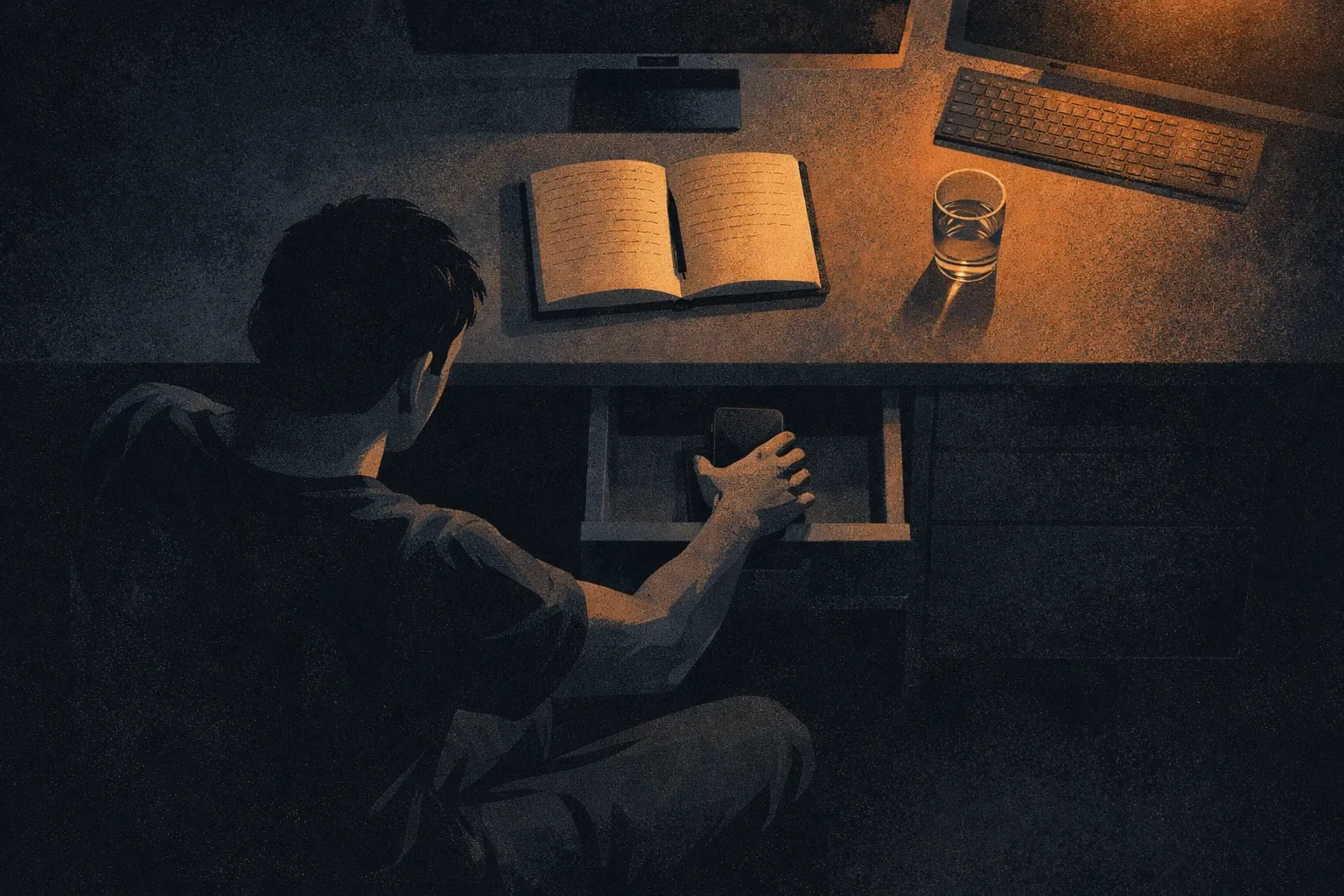
- Stand up and put the phone face-down across the room
- Do 20 push-ups, or splash cold water on your face for 30 seconds
- Text an accountability partner one sentence (even just “urge hit, stepping away”)
- Spend the next 15 minutes on a task you picked ahead of time
Urges rise and fall, and a lot of guys find they ease within about 10–15 minutes of doing something else. The goal is to interrupt the autopilot before it gets too far, and it’s fine if you don’t feel amazing doing it.
Over time the new response starts to become the automatic one, which is the whole point. You want the trigger to lead somewhere different, so you’re not stuck white-knuckling the same moment over and over forever.
Tell someone before you need to
A lot of guys try to handle this completely alone, and that’s a big part of why it keeps coming back.
Secrecy is a lot of what keeps the habit going. The shame cycle (do it, feel bad, hide it, do it again) stays intact as long as nobody else knows what’s happening.
Breaking that doesn’t mean confessing everything to everyone. You need one person who knows what you’re fighting and checks in with you regularly.
An accountability partner doesn’t have to be intense or therapist-like. They just need to know:
- What you’re trying to stop
- That you’ll send a quick check-in every day (one text is enough) and talk properly once a week
- That you’ll tell them honestly when you slip
Short, boring check-ins work way better than big dramatic confessions. “Urge hit last night, I made the right call” or “I slipped Wednesday, here’s what set it off” is plenty.
If faith is part of why you want to stop
If your faith is part of the reason, that’s a real foundation, so don’t underestimate it. We believe masturbation is sin (here’s why), but the point of saying that isn’t to make you hate yourself. It’s to send you to Christ, who forgives you and helps you change (1 John 1:9), so a slip is something to confess and get back up from.
Prayer, Scripture and a church community that takes sexual integrity seriously can give you a reason that goes deeper than a streak counter or a productivity argument, and you’ll need that reason on the nights motivation is gone.
A lot of Christian guys find that the desire to stop is completely real and the habit keeps winning anyway, usually because nothing about their phone, their room or their nights has changed, and there are no accountability systems in place. You need both, because your conviction keeps the reason alive and the practical setup tells you what to do in the next five minutes. Paul calls it making “no provision for the flesh” (Romans 13:14, WEB), which is pretty much what changing your setup is, so there’s nothing unspiritual about installing a blocker.
When you slip
You’ll probably slip at some point. A lot of guys do, and it’s way more useful to plan for that now than to act like it won’t happen.
When it does:
- Don’t let one slip turn into three days. One slip doesn’t erase your progress, and the shame spiral afterward is usually what stretches it out.
- Look at the trigger. Which window did you fall into? What did you ignore beforehand?
- Reset the same day. Waiting until tomorrow or Monday just gives the shame more time to build.
- Tell your accountability person. Being honest fast keeps the shame from piling up.
When you’re ready to stop starting over, Obex puts this in one place: blockers for the apps and sites you choose, a streak, an accountability partner, and Panic Mode for the moment an urge hits.