Gooning vs Edging: What's the Difference and Why It Matters
Are gooning and edging the same thing? How they're different, why neither is a safe middle ground in porn recovery, and how to stop a session early.

Obex
Obex Team
If you spend any time in porn-recovery spaces, you’ve probably seen gooning and edging used like they mean the same thing. They’re related, but they’re not the same.
Edging is a technique: you get close to orgasm, back off, and do it again so the arousal lasts longer. Gooning is a whole practice built on top of it. People edge to porn on purpose for hours, often with several screens going, to get into a trance-like, checked-out state that online communities call “the goon”. So gooning usually involves edging, but plenty of edging never turns into gooning.
The difference matters if you’re trying to quit, because each one keeps you stuck in a slightly different way. So this goes through how they compare, why edging isn’t the safe middle ground it feels like, and how to cut a session off early. If you want the full picture on gooning itself, the signs and how to get out of it, that’s in what is gooning?
How they’re different
| Edging | Gooning | |
|---|---|---|
| What it is | Getting close to orgasm, backing off, repeating | Long porn sessions built on edging |
| How long | A few minutes to a few hours | Usually hours |
| Porn | Not always (some couples edge during sex) | Basically always, often several screens at once |
| What you’re after | More arousal, or a stronger finish | The trance-like state itself, staying in it for hours |
The biggest difference is what the session is for. Edging is usually still about the finish, even when you drag it out. With gooning the trance is the point, so the orgasm becomes secondary and the session is mostly about staying in that state as long as you can.
For a lot of guys, edging is the way in. They start out stretching a session to make it last, and over months that turns into planning whole nights around getting into the goon state.
What edging is
Edging means repeatedly bringing yourself close to orgasm and backing off before you finish, so the arousal lasts longer.
The term started out neutral, and some couples use the technique during sex. In porn-recovery spaces though, edging usually means long porn sessions where someone keeps himself really aroused for an hour, several hours, or longer.
When edging becomes compulsive, the point often stops being the orgasm and becomes staying in the session. That shift is one of the clearest signs the habit has taken over, and it’s usually where edging starts turning into gooning. Is edging bad for you? covers the physical side and when to stop.
What gooning is
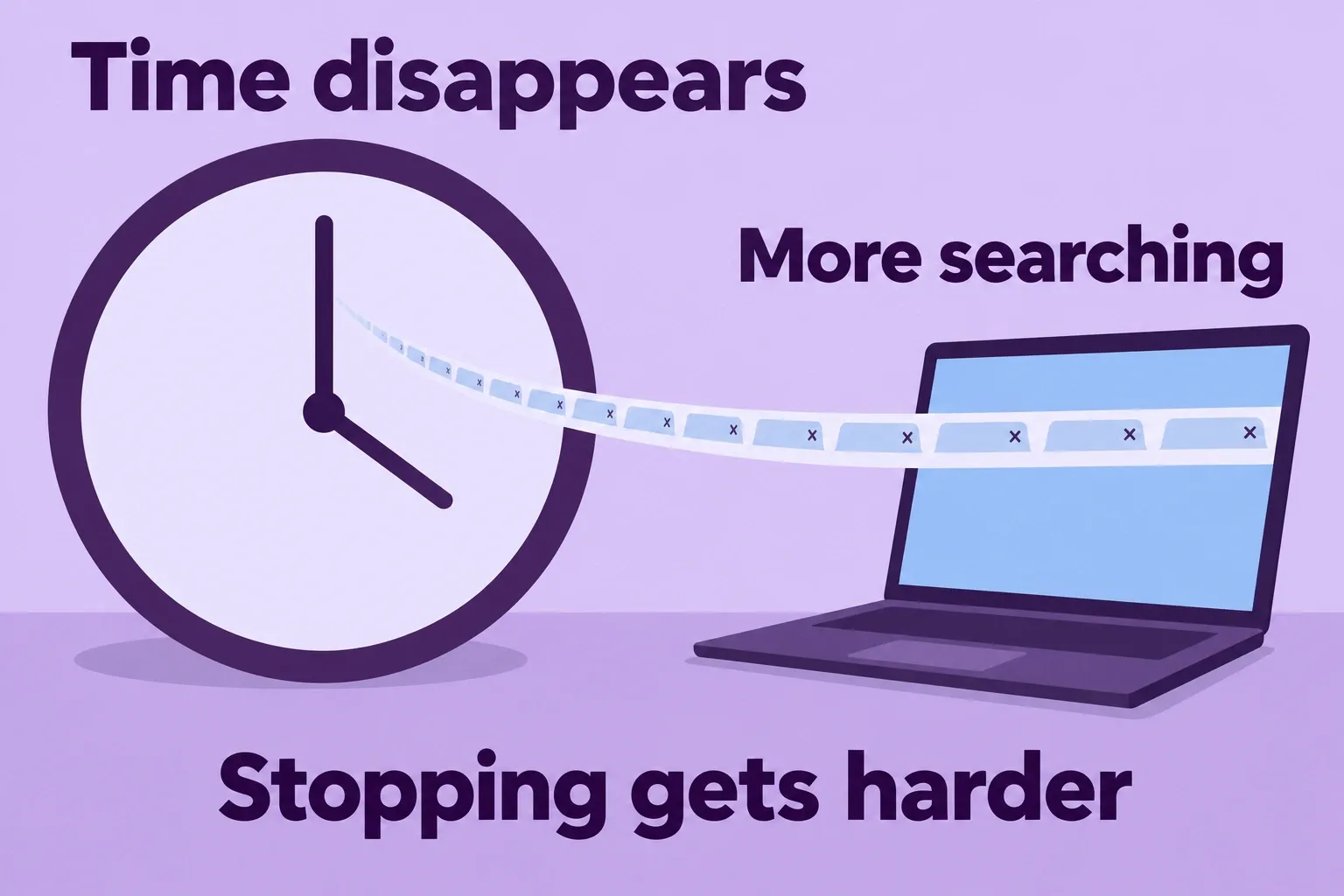
Gooning is slang from online porn communities for edging to porn on purpose, for hours, to reach a trance-like state people call “the goon”. They describe time disappearing, judgment going quiet, and a kind of mental fog where the voice that usually says “ok, enough” just stops. For some guys, getting into that state ends up being the main reason they watch at all.
It isn’t a clinical term, and nobody has studied it as a distinct state. What people describe is still worth taking seriously, especially the part where the state itself turns into the thing you’re chasing.
Why edging isn’t a safe middle ground
A lot of guys trying to quit porn treat edging as a halfway point, like it’s not fully a relapse because they don’t finish. That logic doesn’t really hold up.
An edging session is still a porn session. You’re still in front of the content, still running the same routine that ends with porn, and a lot of the time you’re spending longer on it than a quick relapse would take. Calling it a near miss mostly lets the habit keep going under a different name.
Gooning takes that further. Once the trance is the goal, you’re not managing your arousal anymore, you’re trying to stay checked out for as long as possible. People describe ending up hours deep in content they’d never pick with a clear head, which is a big part of why a gooning relapse tends to feel so much worse than a quick slip.
The physical cost of long sessions
Really long sessions have pretty plain physical costs. People commonly describe soreness and chafed skin from friction, and some describe aching testicles after hours of arousal without finishing, often called blue balls. Sudden or severe testicular pain or swelling is a different thing, though. It can be testicular torsion, which needs emergency care, so go to an emergency room. The same goes for an erection that won’t go down after four hours, which is called priapism.
Your sleep takes a hit too. A session that starts at 11pm and ends at 1am costs you two hours of sleep, and a lot of guys find that tired, late evenings are exactly when the next session is easiest to start.
What to do about it
For both of them the approach is the same, and most of the work happens before a session gets going.
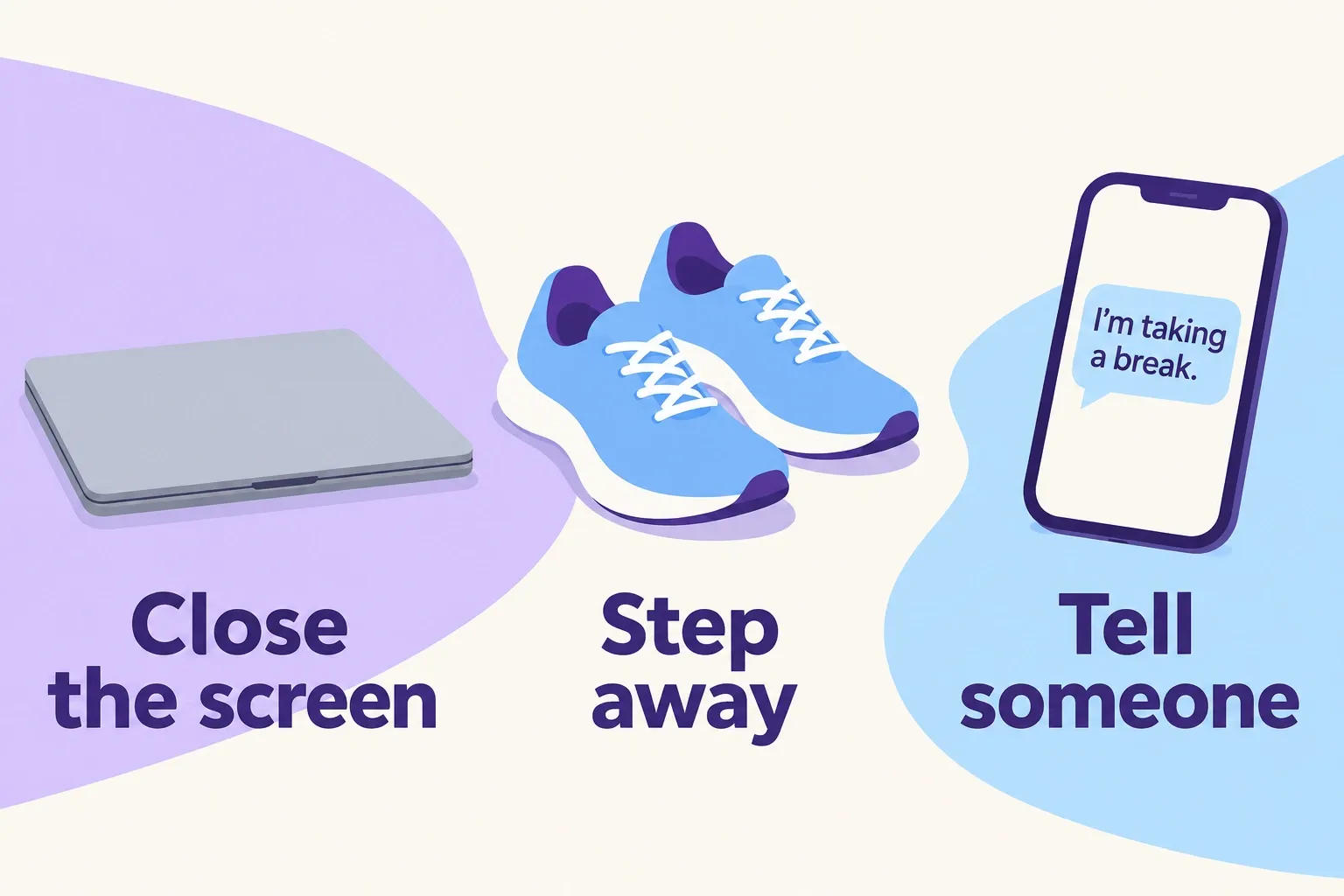
- End it early. Edging sessions don’t start as three-hour marathons. They start with a few minutes you don’t interrupt, and stopping at minute five is way easier than stopping at hour two.
- Add an outside brake. Accountability, a content blocker, or a rule about no devices in your room after a certain time all interrupt the session before it builds. On a Mac, Obex Desktop is a free blocker that covers every browser and app (it needs macOS 15 or later).
- Learn your on-ramp. A lot of guys have a consistent trigger pattern that leads to edging, like a mood, a time of day or a device. Write down what yours looks like: when it starts, how long it goes, and whether it tips into gooning.
- Count edging as a relapse. Treating long edging sessions as setbacks, instead of near misses, changes how seriously you take the first few minutes.
When you feel a session starting, Obex gives you Panic Mode for those first few minutes, when stopping is still easiest, and lets you share your progress with an accountability partner.