Is Watching Porn Every Day Bad? What Daily Use Can Cost You

Luca
Updated · 6 min read
Maybe it’s turned into a nightly thing, in bed with your phone, and at some point you started wondering whether that’s a problem or just normal.
Watching porn every day isn’t a diagnosis on its own, and there’s no medical cutoff where five days a week is fine and seven is a disorder. But a daily habit has a lot of room to grow, and it’s often where guys lose control without noticing when it happened.
So a better test than how often is whether you can stop when you decide to, and what the habit is costing you, which is pretty close to how the World Health Organization draws the line. This goes through that line, what research links to heavy use, what guys describe, and a simple 30-day test to see where you stand. (If you want the general self-check, the signs your use has crossed the line whatever the number, that’s how much porn is too much. This one looks at the daily habit itself.)
There’s no safe daily number
Alcohol has drinking guidelines. Porn has nothing like that, partly because there’s so little research to base one on, and partly because two people with the same daily habit can be in really different places. In one 2020 study of more than 15,000 people, frequent porn users without a problem outnumbered frequent users with one by about three to six times (Bőthe et al., 2020).
One guy watches most nights and could drop it next week without much trouble. Another watches the same amount, has tried to quit four times, and loses an hour of sleep to it every night. The number’s identical, and the situations are completely different.
Where the WHO draws the line
The WHO’s ICD-11 doesn’t list “porn addiction,” but it does include compulsive sexual behaviour disorder (CSBD). The core of it is a persistent failure to control intense, repetitive sexual urges, which leads to repetitive sexual behavior. Signs include:
- it becomes a central focus of your life, to the point of neglecting health, personal care, or other interests and responsibilities
- you’ve made many unsuccessful attempts to cut back
- you keep going despite bad consequences
- you keep going even when you get little or no satisfaction from it
The pattern has to last a long time, around six months or more, and cause marked distress or real impairment in your relationships, work, or other parts of life.
What’s missing from that list is a frequency. Someone can meet these criteria watching three times a week, and someone who watches daily might not. Daily use makes the questions above worth answering honestly, but it doesn’t answer them for you.
What research links to heavy use
Most of the evidence is correlational, so it shows what tends to go along with heavy porn use, and it can’t tell you what porn causes.
- Relationships. A meta-analysis of 50 studies with more than 50,000 participants found that men who watched more porn reported lower sexual and relationship satisfaction. The link was small, and it showed up for men but not for women.
- Erections. The research is mixed. Feeling that your use is out of control is linked to erection problems more consistently than how often you watch, though the study that found this couldn’t show which one drives the other (Grubbs & Gola, 2019). The PIED guide covers what guys describe after quitting. If yours haven’t improved after a few weeks off porn, get a quick check with a doctor.
- Brain scans. A 2014 study of 64 men found that more hours of porn per week went with less volume in one reward-related brain region and a weaker response to sexual images in another. The authors said this could be a result of heavy use, or a trait that made porn more rewarding to begin with.
Gary Wilson, who popularized the idea of rebooting, argues that a daily stream of high-novelty porn dulls the reward system, so ordinary pleasures start to feel flat. That’s a theory with limited evidence. It does match what a lot of guys describe after quitting, though, with food, friends and work feeling more vivid after a few weeks.
The costs guys describe
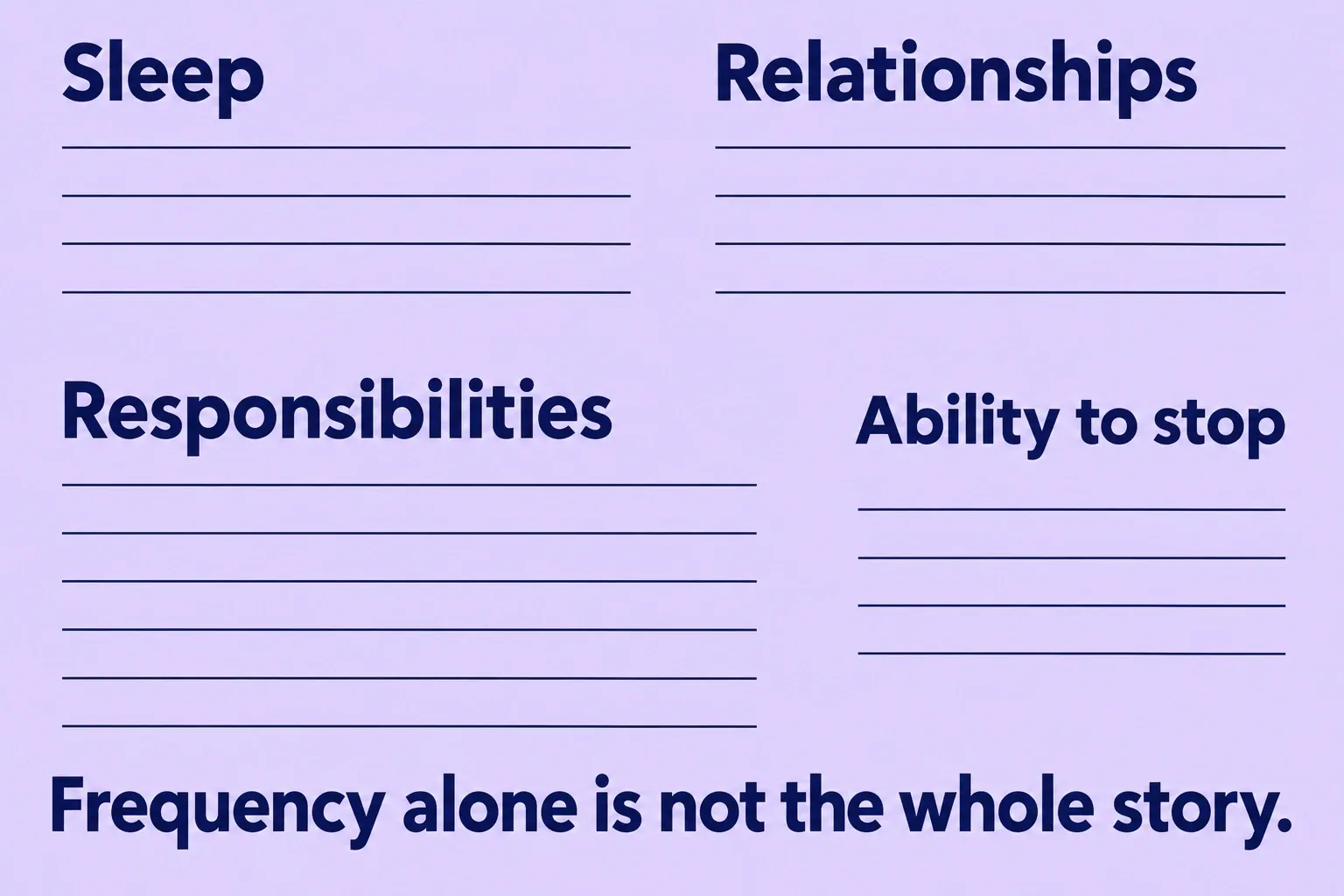
The research leaves a lot open, and what people in recovery communities describe is more concrete:
- Sleep. Daily use often happens in bed, on your phone, late at night. Light at night suppresses melatonin, and blue light does it more strongly, so an hour a night adds up to a lot of short sleep.
- Using it to cope. Bored, stressed, lonely, can’t sleep. When porn becomes the default answer to every uncomfortable feeling, you end up reaching for it before you’ve even decided anything.
- Escalation. Some people describe drifting toward content they wouldn’t have watched a year earlier, or sessions stretching into hours. Gooning is the far end of that drift.
- Secrecy. Clearing your history, timing it around other people, and a low background worry about getting found out.
None of these need daily use to happen, but daily use gives each of them way more chances to settle in.
Guilt and loss of control are different questions
A 2019 review led by psychologist Joshua Grubbs argued that feeling addicted to porn is, in a lot of cases, better explained by moral incongruence, meaning the gap between what you believe about porn and what you do. ICD-11 makes a related distinction: distress that comes entirely from moral disapproval isn’t enough on its own for a CSBD diagnosis.
For a Christian, both questions matter, but they’re separate. You don’t need a diagnosis to take lust seriously, because Jesus located it in the heart (Matthew 5:28), and that doesn’t depend on how often you watch. Feeling convicted also doesn’t mean you’re clinically addicted. Keeping the two apart helps, because you can repent without catastrophizing, and you can get practical help for a compulsion without treating it only as a moral failure. What the Bible says about lust goes further into the first question.
The 30-day test
If you want to know where you stand, take 30 days off. The point is to see what your days look like without the habit, and you don’t have to prove anything to anyone.
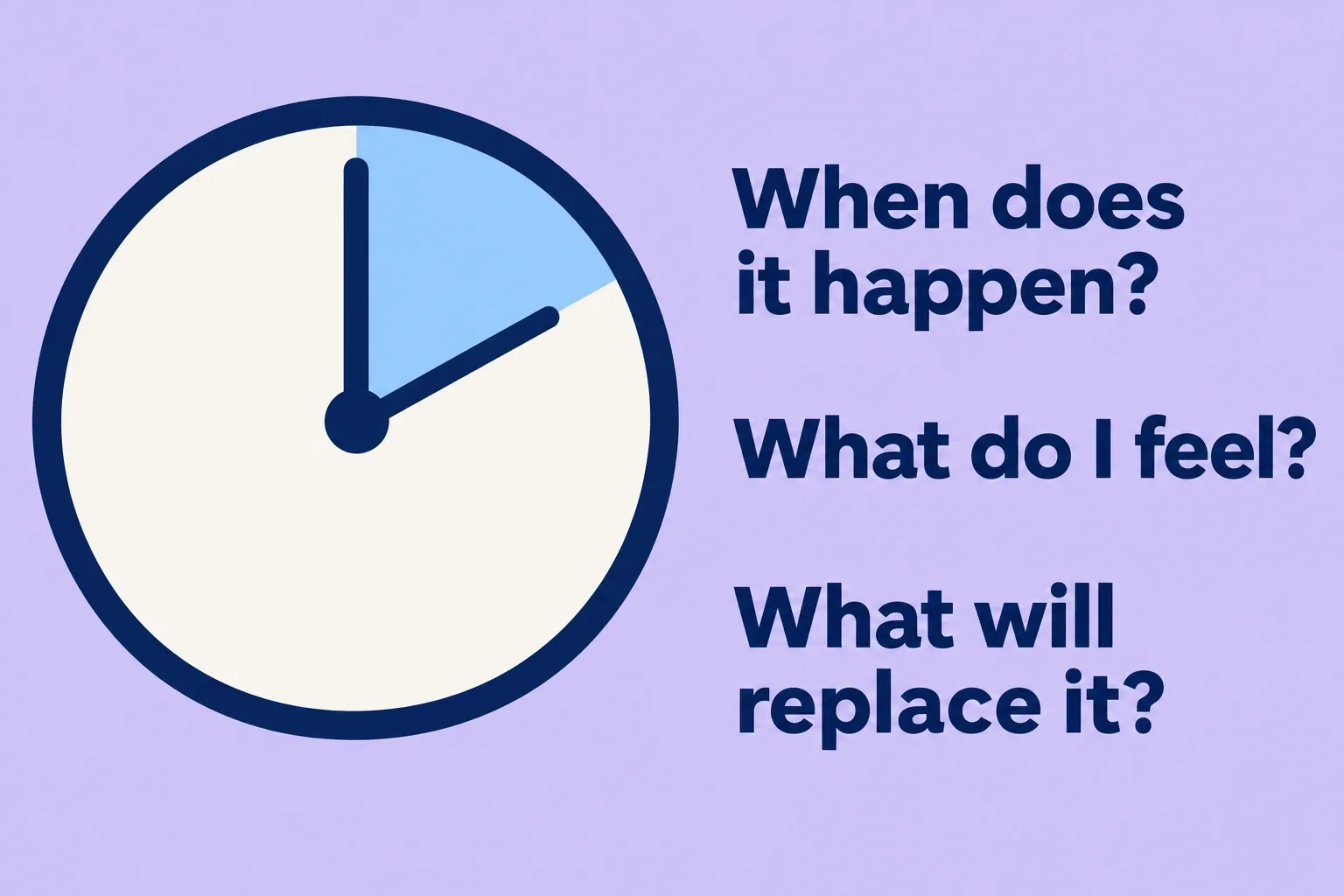
Pay attention to:
- When the urge shows up. Daily habits usually have a slot: in bed, after work, in the shower, when the house goes quiet.
- What it feels like to skip it. Restless and irritable tells you something different from mildly bored.
- What fills the time. Sleep, a conversation, nothing in particular.
Plan for the slot, since that’s when the old habit expects to run. Urges rise and fall, and a lot of people find they ease within about 10 to 15 minutes of doing something else. Obex’s Panic Mode is built for that window: open it when the usual moment comes around, and it gives you tools and Scripture to get through the next few minutes.
If 30 days sounds impossible, or you keep failing in the first week, take that seriously. The porn addiction test can help you make sense of what’s going on.