Why You Can't Quit Porn (And What's Actually Blocking You)
Quit, relapse, promise again? Why you can't quit porn even when you really mean it, and what breaks the cycle once willpower runs out.

Obex
Obex Team
You decide you’re done with porn, you last a few days or a couple of weeks, you relapse, you feel terrible, and then you decide again. After enough rounds of that, it’s pretty easy to start wondering if something is wrong with you.
Usually nothing is. A lot of guys stuck in that loop are fighting it with the wrong tools, mostly willpower and feeling bad, and those just don’t hold up against a habit you’ve run hundreds of times. So this is why you can’t quit porn even when you really mean it: why willpower keeps running out, the four things that keep the cycle going (habit, your setup, the story you tell about yourself, and secrecy), and what breaks it. If you’re after the step-by-step plan, that’s the guide to quitting porn. This one is about why it keeps happening.
Why willpower keeps failing
The usual way to quit is pure willpower, basically “I just won’t do it anymore.” That motivation is strongest right after a relapse, when the shame is fresh, and usually there’s no plan for when urges hit hard, nothing about the phone or the bedroom has changed, and nobody else knows.
Then a few days later it’s 11pm, you’re tired or bored or stressed, you’re alone in bed with your phone, and the motivation has been gone for days. Those are exactly the conditions old habits run best in. When you’re worn out or under pressure, you fall back on whatever you’ve practiced most. (In one experiment, people who had been put under stress kept repeating a learned action even after its reward had lost its value, while unstressed people adjusted, Schwabe & Wolf, 2009.) A resolution you made last week doesn’t stand much of a chance against a routine you’ve run hundreds of times.
That doesn’t make you weak. It just means willpower on its own is the wrong tool for this.
It’s also just a hard thing to quit, which is worth hearing if you’ve been blaming yourself for it:
“”“I’ve battled a few addictions in my life, from nicotine to alcohol and other substances. I’ve overcome all of them, and this was by far the most difficult.”
— a rebooter quoted in Your Brain on Porn by Gary Wilson
The habit loop you’re stuck in
When you “can’t stop,” a lot of what’s going on is ordinary habit stuff. Habit researchers describe it like this: do something in the same setting enough times and the setting itself starts to kick off the behavior, more or less automatically, and the habit can keep going even after you’ve stopped wanting it (Gardner, Lally & Wardle, 2012). That paper is about building healthy habits, but it describes the porn loop pretty well.
For porn the cues are usually things like boredom, loneliness, stress, being alone at night, or a particular device or room. The cue sets off a craving, the craving leads to the behavior, the behavior brings a bit of relief or pleasure, and that relief makes the link a little stronger for next time.
Every time you go through the loop, even when you feel awful afterward, you’re kind of practicing it. Feeling bad later doesn’t undo any of that, because what gets learned is that this sequence leads to relief, and each time it gets a bit better at running on autopilot.
That’s why you can really want to stop and still end up doing it without being totally sure how you got there. A lot of it runs below the level where you’re making decisions.
The porn addiction triggers post goes through how to find your specific triggers and interrupt the loop before it runs.
Your setup is working against you
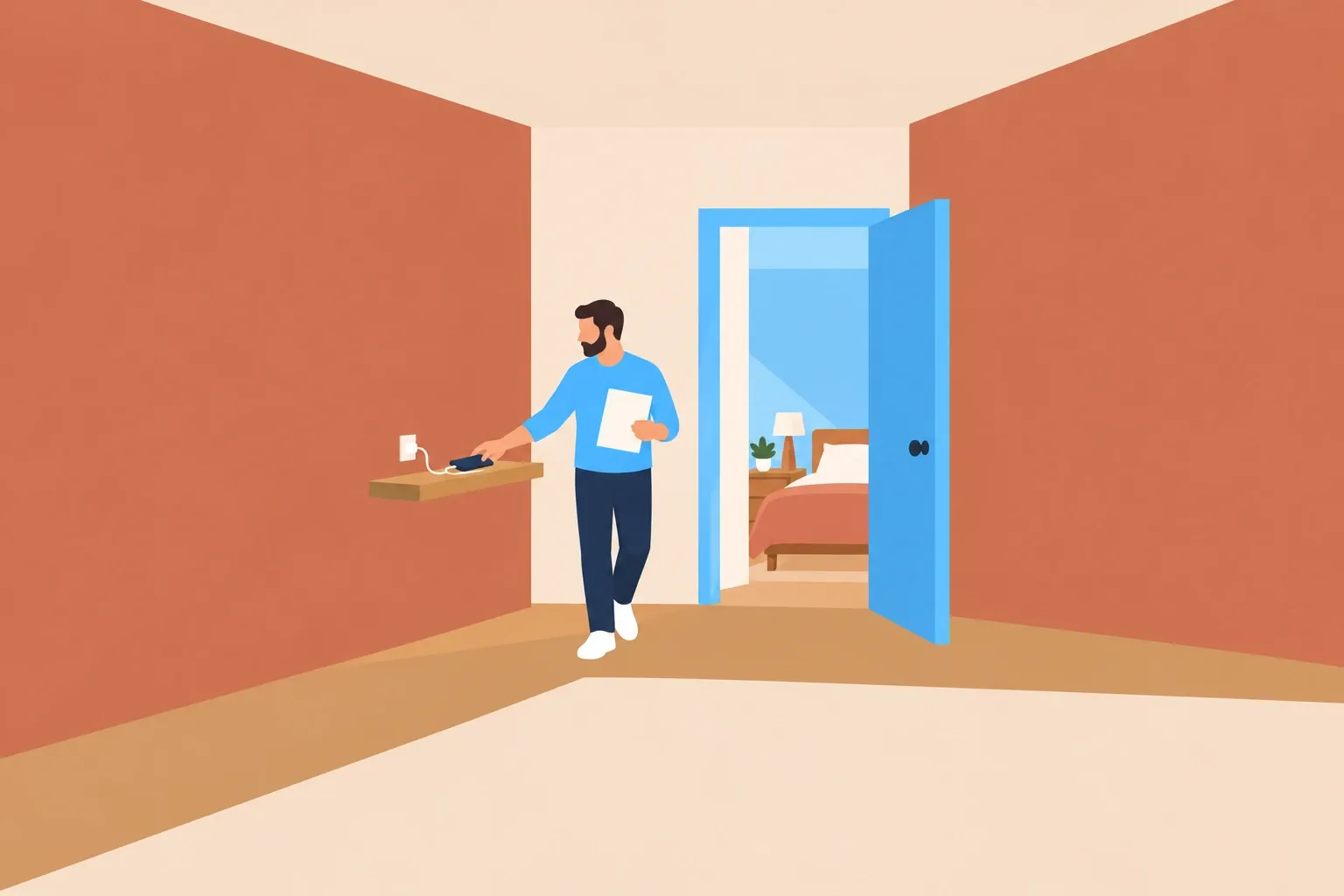
Your setup is probably making relapse easy and recovery hard without you really noticing. If your phone sleeps next to you, if every device has unrestricted internet, and if the app or site you use is one tap away at any moment, then running the habit takes basically zero effort.
One of the most useful things you can do is change your surroundings so acting on an urge takes more effort, with things like content filters, a no-phones-in-the-bedroom rule, or keeping the laptop in a shared room. None of that is exciting, but it works because the automatic behavior gets harder to carry out without thinking.
So the way out of a loop like this is making it harder to finish and building other routines that are easier to run instead.
The story you tell about yourself
If deep down you see yourself as someone who fails at this, every relapse just confirms it (“of course I relapsed, that’s who I am”), and that story can end up steering you more than any burst of motivation does.
You can’t really talk yourself into a new identity by telling yourself you’re different. It changes slowly, as small wins pile up: a few days clean, then a couple of weeks, then a bad night you got through without giving in.
That’s part of why tracking your streak helps. Every day on it is a small piece of evidence that you can do this, and over time those days start to change the story.
Next time you slip, write down the time, the place, the device and how you were feeling before you write a single word about what it says about you.
Secrecy keeps it going
Porn pretty much depends on nobody knowing. The shame that comes with it also tends to drive more of it, because porn ends up being how you cope with the shame that porn caused, which is a loop of its own.
Telling someone, whether that’s a friend, a recovery community, or an accountability partner, is one of the biggest things you can do to break that. The habit leans on secrecy a lot, so once even one person knows, it loses something it was depending on.
You don’t have to tell everyone. One person who checks in on you, even with a quick text every day, is a lot harder to ignore than a promise you made to yourself at midnight.
Pick your one person this week and send one line, something like: “I’ve been struggling with porn and I want to quit. Can I check in with you?”
What breaks the cycle
There isn’t one fix. What tends to help is a few things working together:
- Your setup. Make the behavior harder to do on autopilot.
- Knowing your triggers. Know your specific ones and have a plan for each.
- Accountability. One person who knows and checks in.
- Streak tracking. Progress you can see, which slowly changes the story you tell about yourself.
- Urge tools. A specific plan for when a strong urge hits, so you aren’t relying on gritted teeth.
The urge help guide and the guide to quitting porn both go deeper on specific tactics. Read them, set one thing up today, and don’t wait until you feel more motivated.
Obex puts those pieces in one app: blocking for the apps and sites you choose, a streak you can see, an accountability partner, and Panic Mode for the bad nights.