Why Do I Feel Bad After Masturbating? You're Not Broken
Empty, guilty, or kind of disgusted right after? Why that feeling hits, why it keeps coming back, and how to stop it turning into the next relapse.

Obex
Obex Team
It’s late, you just finished, and the second it’s over something flips. A minute ago nothing else mattered, and now you’re staring at the screen thinking, why did I just do that.
Feeling bad after masturbating is super common, especially for guys who are trying to get away from porn, and it doesn’t mean something is wrong with you. Part of it is what happens in your body right after, and part of it is what the moment means to you. So this goes through both, why the feeling so often turns into shame, and how to use it so it stops setting up the next relapse.
What’s going on right after
Right after orgasm, your body releases prolactin, a hormone researchers link to feeling satisfied and to arousal dropping off.
The popular explanation for the rest of it is dopamine: porn gives you a much bigger hit than normal, so the drop afterward feels like a crash. That theory usually leans on people like Donald Hilton, a neurosurgeon, who argues in a 2013 paper that internet porn works as a “supranormal stimulus” on the brain’s reward system, basically an exaggerated version of something you’re wired to want, with endless novelty on top. His paper doesn’t look at what happens after orgasm though, so the crash part is a popular extension of his idea, not something he tested. It does fit how a lot of guys describe the gap between the high and the minutes right after.
There’s also a name for feeling tearful, sad or irritable after sex: postcoital dysphoria. In one online survey of 1,208 men, 41% said they’d felt it at some point (Maczkowiack & Schweitzer, 2019). That study was about sex, not masturbation, but plenty of guys describe the same flat feeling after masturbating. Feeling it now and then isn’t a disorder.
The “post-nut clarity” meme is about this exact moment. The popular explanation is that the pull drops off and the part of you that cares about your values gets its say again. Whatever the exact chemistry is, the experience is real, and stuff that felt completely compelling two minutes ago suddenly looks really different.
If porn was involved, especially content you’d never choose with a clear head, that clarity can hit pretty hard.
Why it turns into shame
The body stuff explains the flat, empty, kind of weird feeling. What pushes it further into shame and self-disgust is usually one of these.
It goes against what you believe
If what you just did conflicts with your values, whether that’s your faith, a relationship, or a promise you made to yourself, the moment of clarity puts that conflict right in front of you. For a few minutes it was easy to ignore, and now it isn’t.
It goes against your faith
For Christian guys this is usually way more intense, because on top of “that was dumb” there’s “I just did something that goes against who I’m trying to be before God”. That’s a real response, and you weren’t just conditioned into it. A lot of the time it’s conviction. Conviction is supposed to turn you back toward God, though, and the voice saying you’re too far gone isn’t coming from Him. Bible verses about shame and guilt is about exactly that difference.
It’s been going on for years
If this has been a pattern for months or years, the feeling afterward carries the weight of all the other times too. It stops being about tonight and starts being about what it says about you, and that jump is where the feeling starts doing real damage.
When the feeling is worth listening to
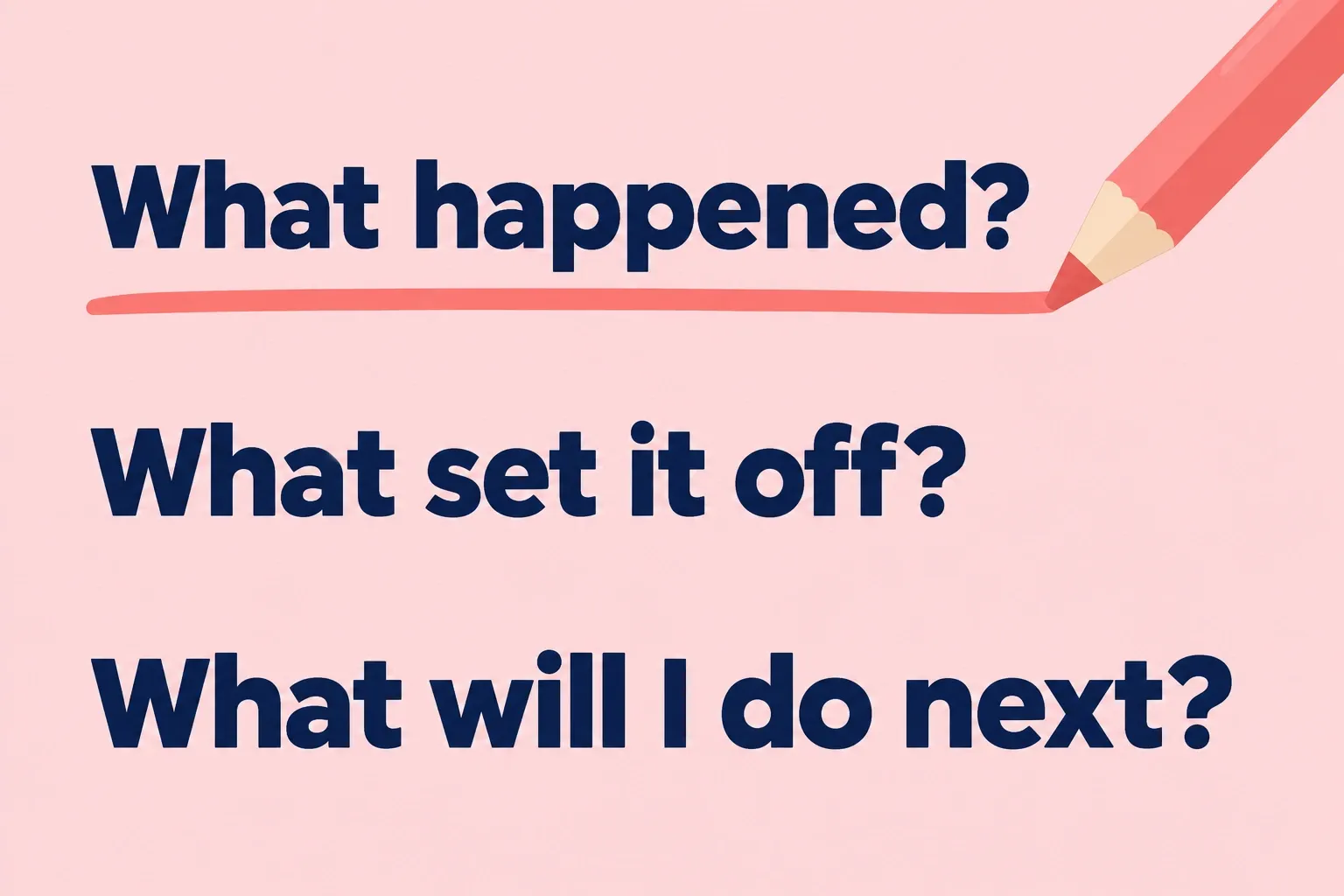
The bad feeling on its own can be useful. What does the damage is the shame spiral that usually comes after it.
The clarity and discomfort afterward, especially when it’s a habit tied to porn, is basically your values doing their job. It’s telling you “that wasn’t what I want”, and that’s good information to have.
A healthy way to respond to it:
- admit it honestly, without catastrophizing
- ask what it’s telling you about your values and what you want
- treat it as information about a pattern you want to change
And the way it usually goes wrong:
- it deepens into “I’m broken, I’m disgusting, I’ll never change”
- you use the shame to justify the next relapse (“I already failed today, so what’s the point”)
- you hide it from everyone, which keeps the whole cycle locked in place
Quick answers
Why does the guilt go away and then come back every time?
Right after, you see the conflict with your values clearly and you feel terrible. Over the next few hours or days the memory fades, stress builds up, and the craving comes back. The guilt only shows up after the act, so it never really gets a chance to stop the next one, and that’s why it cycles.
Is it normal to feel depressed after masturbating?
A lot of guys describe it, especially when porn is involved. Add a values conflict or years of built-up shame and it can feel pretty depressing, and that’s not you being weak. If the low mood sticks around for more than a couple of weeks, talk to a doctor, and if you’re having thoughts of hurting yourself, call or text 988 in the US (988 Suicide & Crisis Lifeline) or your local crisis line.
Does the bad feeling go away if you stop masturbating?
The guilt and emptiness right after stop, because there’s nothing to set them off. The feelings that were driving the habit, like stress, loneliness and boredom, tend to show up more clearly without something to numb them. That’s a good thing honestly, because it means you can deal with the real stuff instead of going around the same loop. If porn is part of it, how to quit porn goes through the whole plan.
How shame sets up the next relapse
A lot of guys find shame sets up the next relapse more than anything else, which sounds backwards until you look at the cycle.
It usually goes like this: you do it → you feel disgusted → you replay what a failure you are → the discomfort builds → you reach for the same thing to numb it → you do it again.
So the shame doesn’t stop the behavior, and a lot of the time it’s what feeds it.
Breaking the cycle means breaking the secrecy. As long as the habit lives entirely in private and nobody around you knows, the shame has nowhere to go, so it just builds and cycles.
Telling one person honestly what’s going on is one of the fastest ways to change that. It won’t fix everything on its own, but the shame loop runs on nobody knowing, and accountability takes that away.
What to do with the feeling
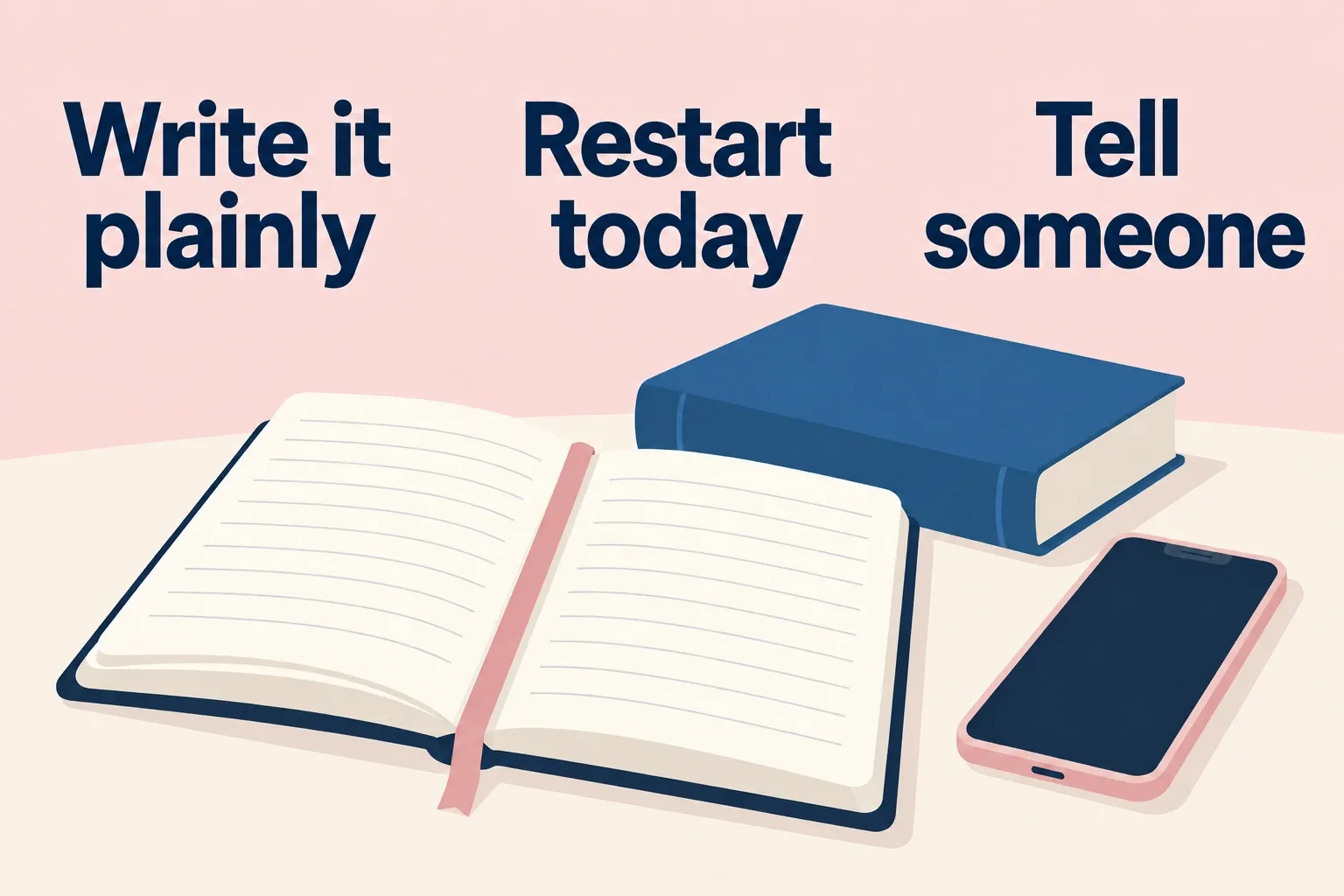
If you’re already feeling bad after masturbating, you can turn it into something useful instead of just sitting in it:
- Write it down. One sentence about what triggered it, what the feeling is, and what you want to do differently. It takes about 60 seconds and turns vague shame into information about your pattern.
- Tell someone. Text an accountability partner, and keep it short: “Relapsed tonight, looking at what set it off, starting again now” is enough. Breaking the silence matters more than what you say.
- Reset the same day. Don’t wait until Monday or write off the whole week, because the longer you put off the reset, the more the shame piles up. If it was a relapse after a long streak, what to do after a relapse walks you through the next 24 hours.
- Come back to your why. If you have faith, this is a moment for prayer instead of hiding. If your reason is a clearer head or better relationships, reconnect with that. Feeling like it wasn’t what you want is your values talking. Calling yourself disgusting isn’t, so skip that part and put the energy into the change you want.
It also helps to know the low doesn’t last forever. A lot of guys who’ve quit say ordinary things started feeling good again after a while, like work, friends, or a normal evening, stuff that felt flat while the habit was running everything.
So no, feeling like this doesn’t mean you’re broken. If tonight was one of those nights, write the one sentence, send the one text, and reset before you go to sleep.
Obex gives you a streak you can restart the same day and an accountability partner to send that one-line text to, so the bad night doesn’t have to stay a secret.