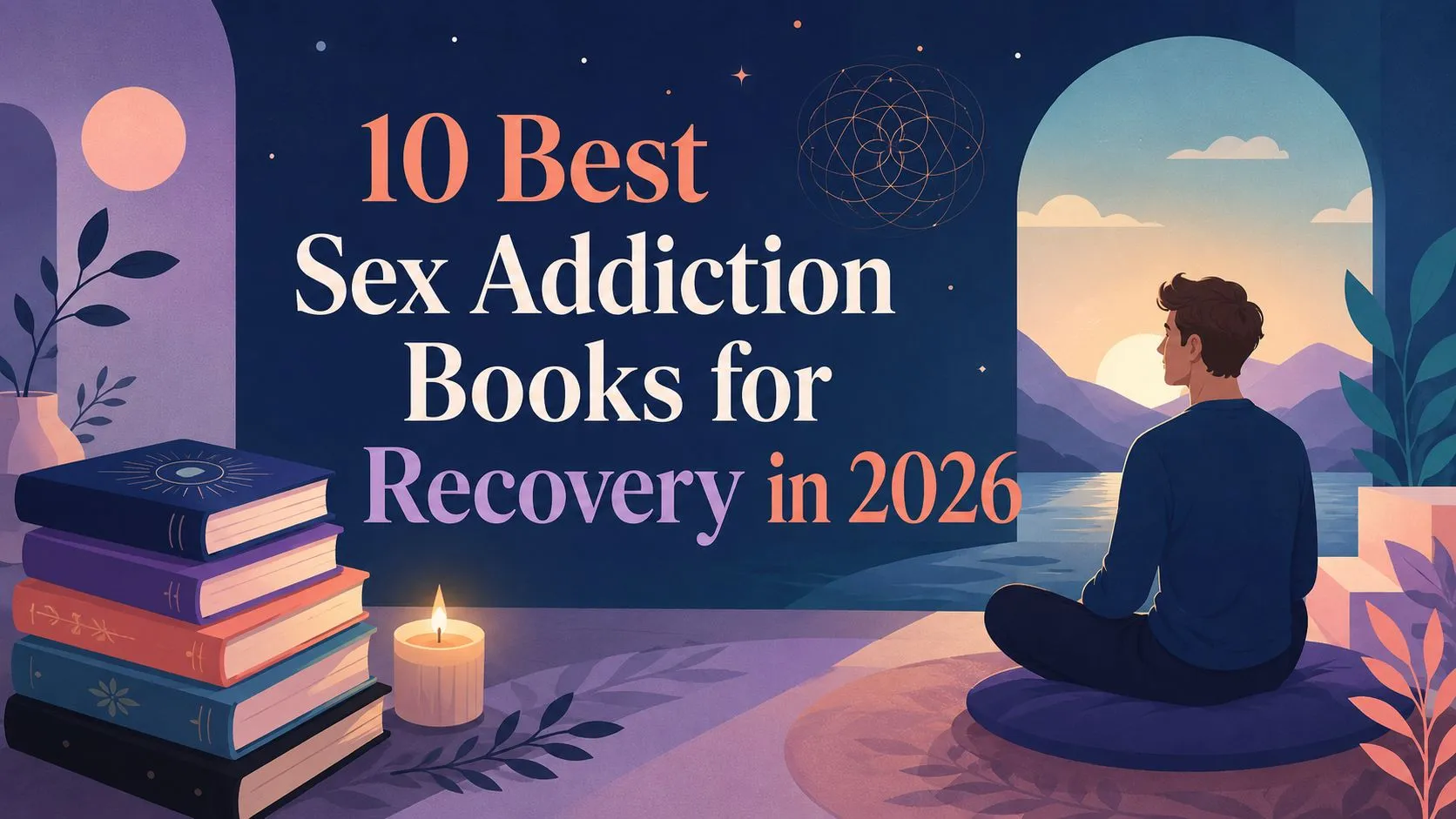
10 Best Books on Sex Addiction for Recovery in 2026
Find the right support with our list of the best books on sex addiction, from clinical guides to workbooks and partner resources. Start your recovery journey.


Obex
Obex Team
What if the problem isn’t finding a book on sex addiction, but finding the right kind of book for the stage you’re in? A person who’s just been blindsided by disclosure needs something very different from a therapist, a spouse, or someone who wants a faith-based frame. That’s why this guide sorts the best books on sex addiction by purpose, not just by popularity. It helps you move faster, with less guesswork, and with a clearer sense of what each title can and can’t do.
Books in this space matter because the field itself is still relatively young. The term “sex addict” first appeared in 1974, and the category became recognizable in the 1980s and 1990s as recovery writing expanded alongside internet porn’s growth, with Patrick Carnes’s Out of the Shadows helping put the modern recovery model on the map in 1983 Sex Addiction: A Critical History. That history explains why the best titles tend to be practical, structured, and recovery-oriented rather than purely academic. It also explains why some readers want an addiction model, while others need a sexual-health or partner-trauma lens.
If you’re looking for practical steps for faith and wellness, this faith and wellness guide can help frame the reading.
Table of Contents
- 1. Out of the Shadows Understanding Sexual Addiction
- 2. Facing the Shadow 3rd ed. Starting Sexual and Relationship Recovery
- 3. Don’t Call It Love Recovery from Sexual Addiction
- 4. The Porn Trap The Essential Guide to Overcoming Problems Caused by Pornography
- 5. Unwanted How Sexual Brokenness Reveals Our Way to Healing
- 6. Wired for Intimacy How Pornography Hijacks the Male Brain
- 7. Treating Out of Control Sexual Behavior Rethinking Sex Addiction
- 8. Sex Addicts Anonymous The Green Book
- 9. Sex Addiction 101 A Basic Guide to Healing from Sex Porn and Love Addiction
- 10. Mending a Shattered Heart A Guide for Partners of Sex Addicts 2nd ed.
- Top 10 Books on Sex Addiction, Quick Comparison
- How to Turn Reading Into Real, Lasting Change
1. Out of the Shadows Understanding Sexual Addiction
從很多讀者和臨床工作者開始理解這個主題的第一本書,往往就是這一本。Patrick J. Carnes 的 Out of the Shadows 常被視為把性成癮帶入現代復原討論的重要著作,這個標題之所以還有份量,是因為它替原本混亂的經驗提供了一個清楚的框架,讓讀者能看見模式,而不只是羞恥感。其歷史位置也有助於理解這本書為什麼會被反覆提起,historical overview 這類回顧也強調了它在早期論述中的影響。
Out of the Shadows 最適合先需要框架的人。它用一般讀者也能跟上的語言,說明成癮循環、觸發點、否認和後果。對正在面對強迫性行為的人來說,這種清楚的描述很有用,對伴侶或家人也同樣有幫助,因為它讓大家有一套共同語言來談正在發生的事。
Best fit
- 剛接觸這個主題的人,需要先建立基本的成癮模型。
- 家人和伴侶,希望先理解行為背後的模式。
- 治療師和陪伴者,想要一套基礎的復原詞彙來使用。
Trade-off 這本書的限制也很明顯,它反映的是較早期的觀點。如果你在找較新的診斷語言,特別是與 ICD-11 或 compulsive sexual behavior disorder 相關的討論,這不是最對口的選擇。它是一張很好的地圖,但不是最新的那張。
Practical rule: 如果你需要先理解模式,再開始處理行為,從這本書開始。
2. Facing the Shadow 3rd ed. Starting Sexual and Relationship Recovery
If Out of the Shadows explains the problem, Facing the Shadow pushes you into action. The third edition is a workbook, and that matters because people stuck in compulsive behavior usually need structure more than inspiration. The book is designed around task-based recovery, which makes it a better choice for people who already know they need change but keep drifting back into old habits.
The strength here is momentum. A workbook forces the reader to slow down, name behaviors, and write things out instead of hiding in vague intentions. That’s especially helpful for relapse planning and disclosure preparation, where clarity beats motivation every time. It also fits well with therapy or group work, since the exercises can become discussion points instead of isolated homework.
The trade-off is obvious. A workbook asks for consistency, and people in crisis don’t always have that. If you’re exhausted, defensive, or still trying to decide whether your behavior is “bad enough,” this can feel heavy. But for someone ready to work, that pressure is part of the benefit.
You can see the book’s recovery orientation on the Facing the Shadow product page. The title also fits the broader historical pattern of recovery books that became more hands-on after the early foundational texts, a shift that lines up with the post-2010 publishing wave noted in the verified data.
Use this one with a therapist, a sponsor, or a group. By itself, it’s a workbook. In the right setting, it becomes a recovery plan.
3. Don’t Call It Love Recovery from Sexual Addiction
Don’t Call It Love remains important because it brought more depth to the addiction model. Carnes drew on a large body of recovering individuals, and the book’s long-standing influence is part of why it still shows up in recovery circles today. The tone is serious but readable, and it helps readers connect behavior with underlying wounds, co-occurring addictions, and family impact publisher page.
This is a better book for people who are past the “what is happening to me?” stage and into the “why does this keep happening?” stage. It’s also useful for families because it doesn’t treat sexual acting out as a single isolated problem. Instead, it places the behavior in a wider recovery picture, which is often what real life looks like.
Why readers still return to it
The book’s strength is its scope. It doesn’t just offer rules. It gives context, and that can reduce shame without minimizing harm. That balance matters in this field, because the literature remains much smaller than the substance-use literature, which is one reason so many sex-addiction books lean on lived patterns and treatment wisdom instead of large research backlogs NIH review.
The downside is age. Some references feel dated, and some readers will disagree with the addiction framing itself. That doesn’t make the book useless. It just means the reader should know what lens it uses before starting.
4. The Porn Trap The Essential Guide to Overcoming Problems Caused by Pornography
This is the most immediately practical porn-specific book on the list. Wendy Maltz and Larry Maltz write with a non-shaming tone, which makes a real difference for people who are already drowning in embarrassment. The book focuses on compulsive pornography use, but it does so in a way that includes intimacy repair and communication, not just quitting behavior.
That makes it especially useful for couples. A lot of porn recovery books stop at abstinence language. This one goes further by addressing trust, sexual connection, and the day-to-day work of rebuilding a healthier relationship. If you want concrete exercises and a calm tone, this is one of the easier books to recommend.
The main limitation is focus. It is strong on porn, but less broad than a general sex-addiction text. That’s fine if porn is the core issue. It’s less ideal if the behavior also includes affairs, anonymous sex, or other compulsive sexual patterns.
For readers who want to pair reading with healthier device habits, this guide to healthy digital habits is a useful companion. The book itself is a good fit for people who need language that doesn’t intensify shame before they’ve even begun to change.
5. Unwanted How Sexual Brokenness Reveals Our Way to Healing
Jay Stringer takes a different path here. Unwanted is less about labeling behavior and more about tracing the story underneath it. That makes it especially helpful for readers who keep asking why they want what they don’t want. The book is faith-informed, but it stays grounded in clinical thinking and practical reflection.
What stands out most is the emphasis on patterns and meaning. Stringer’s approach asks readers to pay attention to desire, history, and personal narrative instead of treating every struggle as identical. That can be freeing for people who have tried pure willpower and found it shallow. It also makes the book easier to use in pastoral care, counseling, or group settings where shame is often high and insight is missing.
A good read when behavior feels confusing
The book is especially useful if your struggle doesn’t fit a simple porn-only story. It helps readers think about what their behavior might be communicating, which can be a more honest starting point than trying to force quick fixes. That said, it’s not the most prescriptive book on the list. If you want a rigid step-by-step plan, this may feel too reflective.
It’s a strong choice for pastors, clinicians, and readers who want healing language that doesn’t collapse everything into one diagnosis. The official product page is worth a look if you want to see whether the tone matches your needs.
6. Wired for Intimacy How Pornography Hijacks the Male Brain
William M. Struthers gives readers a brain-based explanation that’s easy to grasp and easy to discuss in men’s groups. That alone makes the book valuable. Many people don’t change until they understand that repeated porn use shapes attention, expectation, and intimacy. Struthers translates that idea into plain language.
The Christian frame is direct, and that’s a plus for readers who want discipleship language alongside behavior change. It also helps with motivation, because some people need a moral and biological explanation before they’ll take action. For men’s ministries, accountability groups, and church-based recovery settings, the book can open honest conversation without getting lost in jargon.
The trade-off is reach. It’s aimed mainly at Christian men, so women and LGBTQ+ readers may not see themselves in it. That doesn’t make the insights irrelevant, but it does narrow the audience.
For readers trying to understand the physical and emotional side of withdrawal, this Obex explainer on sex withdrawal effects pairs well with the book’s brain-based lens. Struthers’s value is not that he replaces therapy. It’s that he gives readers a reason to stop pretending the problem is only about weak will.
7. Treating Out of Control Sexual Behavior Rethinking Sex Addiction
This is the clearest clinical alternative to the sex-addiction label on the list. Douglas Braun-Harvey and Michael Vigorito approach the issue through sexual health, not moral panic. That makes the book especially useful for therapists, advanced readers, and anyone who wants to understand compulsive sexual behavior without assuming addiction as the starting point.
The book’s strength is its structure. It offers assessment and treatment logic that fits a more neutral clinical frame, which matters because the diagnostic picture is still debated in the field. Recent reviews continue to note controversy around classification and call for better evidence, better population representation, and cleaner treatment methods Frontiers review. If you want a book that reflects that debate instead of flattening it, this is the one.
Who should choose this over a classic recovery book
Choose this if you’re a therapist, a clinician-in-training, or a reader who feels uneasy with the addiction label. It’s also a strong option for people who want a more sex-positive, non-pathologizing stance while still taking the behavior seriously. The book is less of a comfort read and more of a professional tool.
That’s the trade-off. It won’t feel as familiar to people who grew up in 12-step culture. But for the right reader, that’s exactly why it works.
8. Sex Addicts Anonymous The Green Book
The Green Book is for people who want a fellowship-based recovery text, not just a private read. It gives readers the basic language of SAA, personal stories, and a practical framework for defining sobriety through bottom, middle, and inner circles. That makes it one of the most usable books for people already in meetings or thinking about sponsor work SAA store.
Its biggest strength is community fit. If you’re working a 12-step process, or you want a self-defined sobriety framework that isn’t overly clinical, this book gives you common ground with others. That matters because sex-addiction recovery often works better when reading is paired with real accountability, not just private insight.
The downside is also clear. 12-step language doesn’t fit everyone. Some readers find the stories triggering, and others prefer a treatment model that isn’t tied to fellowship language at all. That doesn’t make the book weaker. It just means the book’s usefulness depends on your recovery environment.
The historical record in the verified data shows that books like this helped create a recognizable recovery canon, alongside titles such as Sex Addiction Workbook and Sex and Love Addicts Anonymous literature review. That canon still matters because many readers don’t need a new theory. They need a way to stay connected long enough to change.
9. Sex Addiction 101 A Basic Guide to Healing from Sex Porn and Love Addiction
This is the best starter book for people who want a modern overview without getting buried in theory. Robert Weiss writes for readers who need signs, consequences, and a recovery path in plain language. That makes it a strong first stop for someone before therapy, before group work, or before deciding which deeper book to read next.
The practical appeal is obvious. It covers sex, porn, and love addiction together, which helps readers who don’t neatly fit one label. It also includes partner-support perspectives, which is useful because recovery rarely affects only one person. If you need orientation fast, this is one of the strongest choices.
The trade-off is depth. A primer can’t do what a specialist manual does. If you need detailed clinical nuance, go elsewhere. If you need clarity, this book earns its place.
For readers who want a companion tool while they’re reading, this Obex relapse prevention guide fits well with the book’s practical tone. It’s also one of the books that reflects the dense mid-to-late 2010s publishing cycle, when sex-addiction writing became more specialized and more treatment-oriented verified publishing timeline.
A strong first book for mixed situations
If you’re unsure whether your situation is porn-only, relationship-driven, or more general compulsive sexual behavior, this book gives you a clean starting point. It won’t settle every debate, but it will help you name what’s happening.
10. Mending a Shattered Heart A Guide for Partners of Sex Addicts 2nd ed.
Partners need different books than the person with the compulsive behavior. Mending a Shattered Heart speaks directly to betrayal trauma, safety, boundaries, and the hard decisions that come after discovery. That focus is why it belongs on any serious list of books on sex addiction.
The book is validating without being naive. It helps partners understand why they feel destabilized, and it gives them language for self-protection and healing. That makes it a good fit for spouses, long-term partners, and anyone who’s trying to decide what recovery should look like on their side of the relationship.
One of the biggest mistakes people make is handing partners the same self-help book the acting-out partner is reading. That rarely works. Partners usually need trauma education first, not more pressure to forgive faster. The verified ATSAC reading list also shows that partner-focused titles are a clear part of the field, not an afterthought ATSAC books list.
For readers dealing with relationship fallout, this guide on pornography and marriage is a useful companion. The book itself is heavy, but that’s part of its honesty. Betrayal is heavy too.
Top 10 Books on Sex Addiction, Quick Comparison
| Title | ✨ Core features / Unique selling points | 💰 Practical value / Usability | ★🏆 Quality & evidence (rating) | 👥 Target audience |
|---|---|---|---|---|
| Out of the Shadows, Patrick J. Carnes, PhD | ✨ Addiction‑cycle framework, task‑based recovery, 12‑step alignment | 💰 High foundational value; readable for self & therapists | ★★★★ 🏆 Widely cited classic | 👥 Individuals, families, clinicians |
| Facing the Shadow (3rd ed.), Patrick J. Carnes, PhD | ✨ Thirty‑Task workbook; stepwise exercises, relapse planning | 💰 Very practical for groups; requires active effort | ★★★★★ 🏆 Action‑oriented group tool | 👥 Counselors, recovery groups, individuals |
| Don’t Call It Love, Patrick J. Carnes, PhD | ✨ Research‑driven case narratives; co‑occurring addictions | 💰 Comprehensive, good for deep study; dated examples | ★★★★ Empirical for its time | 👥 Individuals & families, therapists |
| The Porn Trap, Wendy & Larry Maltz, LCSW | ✨ Non‑shaming porn‑focused relapse tools; partner worksheets | 💰 Highly usable for couples; concrete exercises | ★★★★★ 🏆 Practical, compassionate guide | 👥 Individuals, partners, therapists |
| Unwanted, Jay Stringer, LMHC | ✨ Large‑sample research; story‑mapping; reflective prompts | 💰 Insightful but process‑heavy; good for groups | ★★★★ Research‑backed, faith‑informed | 👥 Pastors, clinicians, faith groups |
| Wired for Intimacy, William M. Struthers, PhD | ✨ Neurobiology of porn, rewiring strategies, men’s group prompts | 💰 Accessible brain‑based rationale; faith‑aligned | ★★★ Popular with men’s ministries | 👥 Christian men, men’s groups |
| Treating Out of Control Sexual Behavior, Braun‑Harvey & Vigorito | ✨ Sexual‑health plan, assessment, MI‑informed protocols | 💰 Clinician‑oriented; structured treatment manual (higher cost) | ★★★★★ 🏆 Evidence‑attentive clinical text | 👥 Therapists, advanced clinicians |
| Sex Addicts Anonymous (Green Book), SAA | ✨ Fellowship basics, sobriety circles, personal stories | 💰 Practical for meeting work; multiple formats | ★★★★ Trusted 12‑step resource | 👥 Meeting participants, sponsors |
| Sex Addiction 101, Robert Weiss, PhD | ✨ Concise primer, checklists, recovery roadmaps | 💰 Great starter orientation before therapy | ★★★ Readable intro resource | 👥 Newcomers, partners, clinicians |
| Mending a Shattered Heart, Stefanie Carnes, PhD | ✨ Partner trauma education, boundaries, safety planning | 💰 Highly practical for partners; emotionally heavy | ★★★★ Validated partner guide | 👥 Spouses/partners, therapists |
How to Turn Reading Into Real, Lasting Change
A book is a map, not the journey itself. The readers who get the most from books on sex addiction usually do one thing right, they turn reading into a support system instead of treating it like a secret project. That means choosing one book that fits your role, reading it slowly, and talking about what you learn with someone who can help you stay honest.
Start with the book that matches your situation. If you’re the person struggling, a classic like Out of the Shadows, a workbook like Facing the Shadow, or a primer like Sex Addiction 101 may be the best start. If you’re a partner, Mending a Shattered Heart makes more sense. If you want a clinical alternative, Treating Out of Control Sexual Behavior is the clearer fit. The right book reduces confusion. The wrong one can add more shame.
1. Find an ally. Share the parts that hit home with a therapist, sponsor, pastor, or trusted friend. Recovery gets stronger when reading becomes a conversation, not a private rescue mission.
2. Use a tool alongside the book. Knowledge alone won’t interrupt urges or build consistency. A recovery app can help you track streaks, notice patterns, and get support during high-risk moments. That’s where a platform like Obex can fit naturally, since it combines accountability, progress tracking, and practical relapse-prevention support.
3. Put one lesson into action each week. Don’t try to overhaul everything at once. If your book talks about triggers, start naming triggers. If it talks about boundaries, write one boundary down. If it talks about partner trust, make one honest disclosure in the right setting.
The most useful books in this category don’t just explain addiction. They help you take the next clean step. Pick one, read with purpose, and let it lead you into action.
Obex gives people a practical way to support porn addiction recovery, accountability, and relapse prevention while they work through books like these. If you want structure for the hard moments, visit Obex and see how the app can help you turn reading into daily follow-through.