How to Worship Your Wife: A Christian Husband’s Guide
Learn how to 'worship your wife' in a healthy, biblical way. This guide for Christian husbands covers honoring your wife as a key part of recovery and growth.


Obex
Obex Team
A lot of advice around worship your wife goes wrong at the start. It sounds bold and romantic, but it often pushes men toward a bad model. Some hear idolatry. Others hear flattery. Others turn their wife into a project, a fantasy, or a reward for their recovery.
None of that heals a marriage.
If you’re a Christian husband, especially one rebuilding trust after pornography use, the better path is simpler and harder. Don’t worship your wife. Honor her completely. Serve her with integrity. Tell the truth. Treat her as a whole person, not a mood regulator, not a symbol, and not a stand-in for what porn trained your mind to chase.
That kind of love is less dramatic. It’s also far more real.
Table of Contents
- What “Worship Your Wife” Really Means (And What It Doesnt)
- From Pedestal to Partner The Mindset of Biblical Honor
- Build Daily Rhythms of Respect and Service
- Speak Words That Heal and Connect
- Rebuild Spiritual and Emotional Oneness
- Create Systems for Lasting Change
- A Love That Honors God and Your Wife
What “Worship Your Wife” Really Means (And What It Doesnt)
The phrase is awkward because it blurs two very different things.
In Christian faith, worship belongs to God alone. Independent Christian writing on marriage makes that point clearly and treats “worship your wife” as a call to excessive honor, not religious worship, which helps answer the underlying concern many husbands feel about whether the phrase is spiritually unsafe. Crossway’s marriage teaching makes that distinction directly in its article on rooting your marriage in worship.
That matters because men in recovery often swing between extremes. One extreme is neglect. The other is overcorrection. After porn use, a husband may try to prove change by becoming intense, overly sentimental, or strangely dependent on his wife’s approval. He may call that devotion. It often feels heavy to her.
Practical rule: If your version of love makes your wife carry your guilt, manage your emotions, or reassure you constantly, it isn’t honor.
Biblical honor is different. It sees your wife as a person made in God’s image. It values her mind, her body, her limits, her grief, her voice, and her walk with God. It doesn’t put her above God. It doesn’t make her responsible for saving you from lust. It doesn’t turn affection into pressure.
A healthy husband can say, “I cherish my wife,” without saying, “My wife is my center.”
Here’s the plain reframe:
- Not worship: idolizing, clinging, exaggerating, performing
- Yes honor: listening, protecting trust, telling the truth, serving steadily
- Not pedestalizing: acting like she must be perfect
- Yes partnership: loving her as a real woman with strengths and burdens
If you want to “worship your wife” in a Christian sense, translate that phrase before you act on it. What you’re aiming for is honor without idolatry.
From Pedestal to Partner The Mindset of Biblical Honor
Men who want to repair intimacy often think they need bigger feelings. Usually they need a better frame.
Putting your wife on a pedestal is not the highest form of love. It’s a distorted form of love. It looks admiring on the surface, but it often turns her into an ideal instead of a person. That creates pressure fast. She feels watched, measured, and burdened by your need for her to confirm your change.
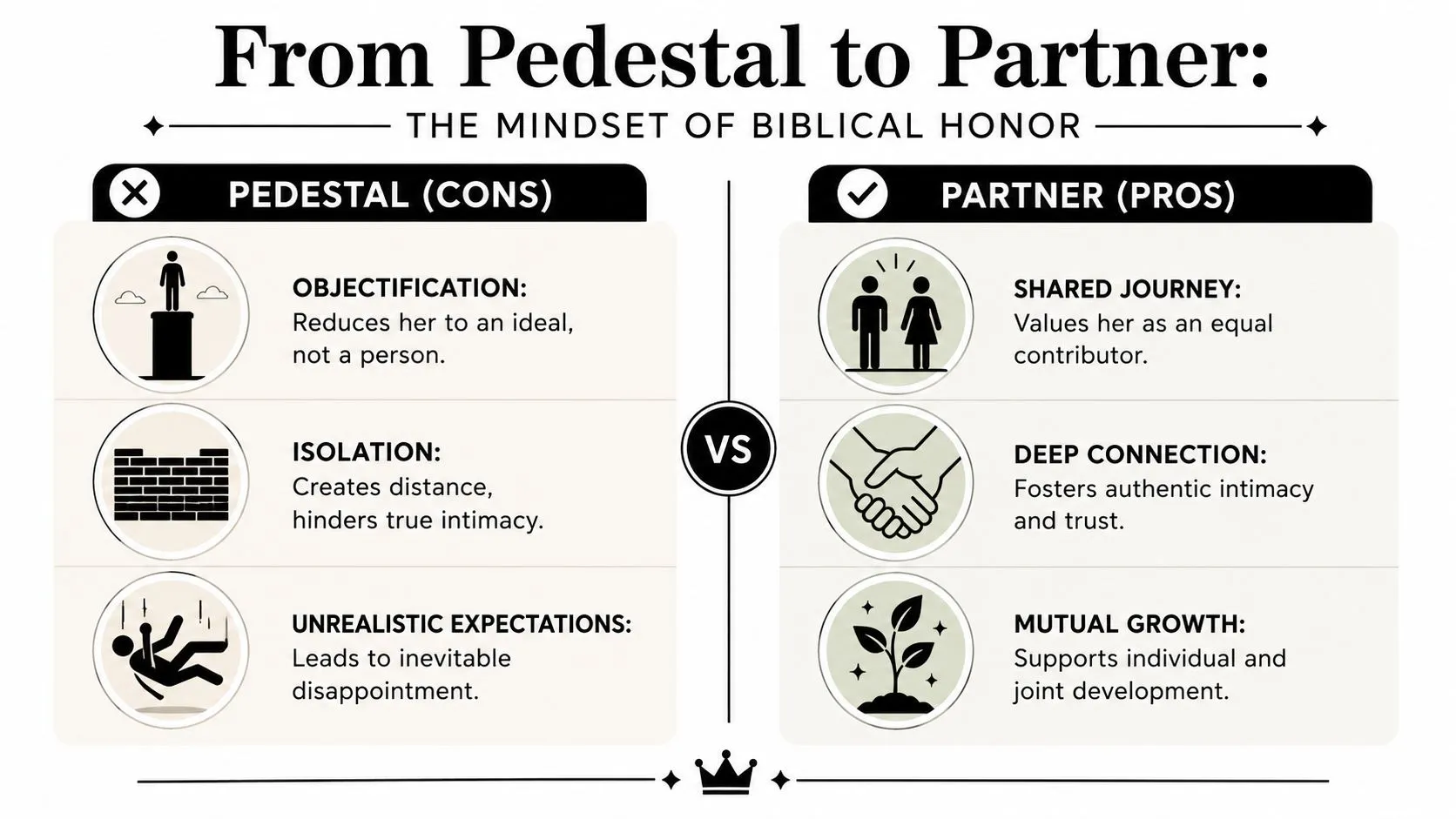
Why the pedestal model breaks down
A pedestal always creates distance. The person up there can’t relax. The person down below can’t connect authentically.
The logic is simple. If you idealize your wife, you stop relating to her truthfully. You either ignore her humanity or resent her for failing to match the image in your head. Both reactions damage trust.
That problem gets sharper in porn recovery. Porn trains a man to split desire from relationship. It trains the mind to chase intensity, not covenant. If that same man now tries to “worship” his wife, he may only be replacing one fantasy with another. The object changes. The habit of distortion stays.
A wife doesn’t need to be adored like an icon. She needs to be known, respected, and safe with you.
The partner model is stronger
A better mindset is partner, not pedestal.
Modern pastoral teaching has started naming this clearly. Worship Center says, “God’s desire for your marriage is collaboration, not control,” and its article draws a firm line against abuse by citing the U.S. Department of Justice definition of domestic violence as a pattern used to maintain power and control in its piece on marriage as collaboration, not control. That’s a useful guardrail. Honor is never domination. Service is never ownership.
Here’s the shift that helps most husbands:
| Old mindset | Better mindset |
|---|---|
| “She completes me” | “We build a life together” |
| “If I adore her enough, we’ll be okay” | “If I become honest and steady, trust can grow” |
| “I must never disappoint her” | “I must deal truthfully with disappointment” |
| “She should feel lucky now that I’m changing” | “She deserves patience while I prove change over time” |
What this looks like in real life
A partner mindset changes how you act on hard days.
- When she’s hurt: You don’t demand quick forgiveness.
- When she’s distant: You don’t panic and chase reassurance.
- When she confronts you: You don’t collapse into shame theater.
- When she speaks plainly: You receive it as part of repair.
Biblical honor is not dramatic. It is sturdy. It treats your wife as a co-heir, not a trophy and not a therapist.
That’s the mindset that can carry recovery. Anything less usually turns into performance.
Build Daily Rhythms of Respect and Service
Change gets believable when it becomes ordinary.
A husband who wants to honor his wife doesn’t wait for anniversaries, emotional breakthroughs, or one big apology. He builds a pattern she can live inside. That pattern should feel calm, concrete, and repeatable.

Small actions that carry weight
These habits matter because they remove selfishness from the center of the home.
- Put the phone down: When she starts talking, place your phone face down or leave it in another room. Attention is one of the clearest forms of respect.
- Take one invisible task: Do a chore she normally carries without announcing it. Clean up the kitchen. Handle bedtime. Fold the laundry you usually walk past.
- Ask a better question: Instead of “How was your day?” ask, “What felt heavy today?” Then listen.
- Make eye contact when she speaks: Not intense eye contact. Present eye contact. The kind that says you’re not splitting your attention.
- Reduce avoidable friction: Refill the car, prep the coffee, set out what the kids need, deal with the errand before she has to ask.
Porn recovery has to show up here too. If you’re trying to break old patterns, build daily habits that interrupt autopilot and strengthen self-control. Resources on overcoming temptation in daily life can help you think in terms of rhythms, not just urges.
Service without scorekeeping
Some husbands start serving, then mentally keep score. That poisons the act.
Don’t do the dishes so you can feel righteous later. Don’t become “helpful” as a way to be noticed. Don’t stack good deeds and then expect closeness on demand. Your wife can feel that trade.
Try a weekly reset instead:
- Pick one burden she carries often.
- Ask how you can reduce it this week.
- Do it without needing praise.
- Review whether you followed through.
A short daily checklist
When the day is done, use this.
- Attention: Did I give her my full focus at least once today?
- Service: Did I lighten her load in a real way?
- Tone: Did my voice feel safe, or sharp?
- Truthfulness: Did I hide anything, minimize anything, or dodge anything?
- Initiative: Did I lead in care, not just react to problems?
You don’t need perfect execution. You need consistency. Wives trust what repeats.
Speak Words That Heal and Connect
A lot of men in recovery don’t just need cleaner habits. They need a cleaner language.
Porn use trains the mind toward secrecy, image, and self-protection. That shows up in speech. You dodge. You soften the truth. You talk around pain. Then you wonder why your wife doesn’t feel close.
Words can help repair that.

Use plain ownership in apologies
A real apology is specific. It doesn’t ask for comfort halfway through.
Try this pattern:
- Name the act: “I lied about what I was doing.”
- Name the impact: “That made you feel unsafe and alone.”
- Own the choice: “I chose secrecy.”
- State the change: “I’m putting real guardrails in place.”
- Release the outcome: “You don’t have to trust this quickly.”
What not to say:
- “I’m sorry you feel that way.”
- “I already said I’m sorry.”
- “I’m trying my best.”
- “Can’t we move on?”
Those lines protect you. They don’t help her.
Praise her person, not just her appearance
Physical appreciation matters. But if that’s all you offer, especially after porn damaged trust, your words may land as shallow or loaded.
Say things like:
- “You handled that conversation with a lot of wisdom.”
- “I respect how steady you’ve been.”
- “You bring peace into this home.”
- “I saw the way you cared for our family today. Thank you.”
- “I trust your read on this.”
Those words communicate honor. They tell her you see more than a body.
That sentence can open a better conversation than most long speeches.
Questions that invite connection
Ask questions that can’t be answered with “fine.”
- For emotional connection: “What’s something you’ve been carrying?”
- For repair: “What do I do that makes it harder to trust me?”
- For closeness: “When do you feel most alone with me?”
- For support: “What would care from me look like this week?”
After you ask, don’t defend.
Later, if you want a short teaching tool on communication and connection, this video can help frame the work in practical terms:
Replace pressure with clarity
Some men use spiritual language to force emotional outcomes. Don’t say, “I’m honoring you,” while ignoring her discomfort. Don’t say, “I’m leading,” when you’re really controlling the pace of repair.
A healing sentence is clear and open:
“I want to rebuild trust at a pace that feels honest to you. Tell me what helps and what doesn’t.”
That kind of speech is mature. It doesn’t perform intimacy. It creates room for it.
Rebuild Spiritual and Emotional Oneness
A marriage hurt by porn usually doesn’t need more intensity first. It needs shared reality.
That means emotional honesty, spiritual humility, and a way of reconnecting that does not make your wife responsible for stabilizing you. Many men often misunderstand this point. They feel genuine affection, then lean too hard on it. They want closeness, but they turn their wife into the main answer for loneliness, shame, or desire.
Independent Christian marriage guidance has noted that one of the missing nuances in this conversation is the line between admiration and unhealthy pedestalizing. It also points out that men often need help showing deep affection without turning their wife into a substitute for validation, sexual fantasy, or emotional regulation, as discussed in Paul Chappell’s article on real ways to honor your wife.
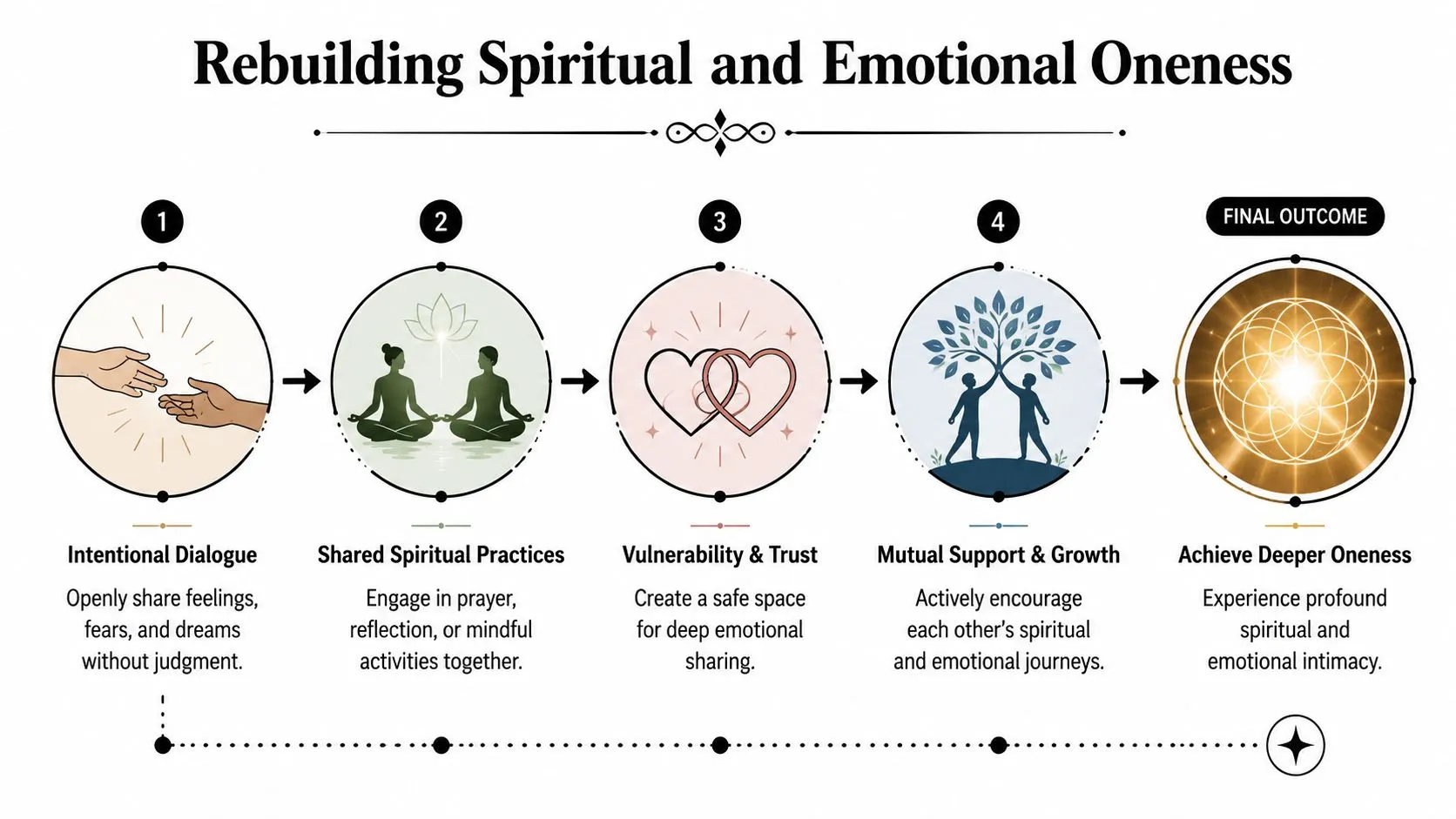
Start with shared honesty
If your wife has been harmed by secrecy, emotional oneness won’t grow in vague language.
Use direct sentences:
- “I feel temptation when I isolate.”
- “I notice I want comfort without doing the work.”
- “I’m ashamed, but I’m not going to hide.”
- “I want to reconnect with you without pressuring you.”
That last line matters. A wife can usually tell when “closeness” is really a disguised demand for reassurance or sex.
Practice simple spiritual connection
You do not need to become intense to become spiritual together.
Try a few steady practices:
- Pray briefly at night: Keep it short and real. One minute is enough if that’s where you are.
- Read a short passage together: Not as a sermon. Just read and sit with it.
- Share one struggle and one gratitude: Keep it human, not polished.
- Name one hope for your marriage: Not about chores, money, or the kids.
For many couples, awkward prayer is still better than polished distance.
Shared prayer is not a performance. It is two imperfect people turning toward God together.
Reconnect body, heart, and spirit
Porn separates what God joined. It teaches the body to move without covenant, the mind to consume without tenderness, and the heart to avoid exposure.
Honor starts reversing that split.
| Area | Unhealthy pattern | Healthier pattern |
|---|---|---|
| Emotional life | Hide and manage image | Tell the truth early |
| Spiritual life | Perform strength | Admit need before God |
| Physical intimacy | Seek relief or validation | Seek connection with patience |
If you need support outside the marriage while rebuilding these patterns, resources on why accountability works better than white-knuckling can help you stop expecting your wife to carry what accountability should carry.
Oneness returns slowly. It grows where truth, gentleness, and consistency meet.
Create Systems for Lasting Change
Good intentions don’t protect a marriage. Systems do.
If you’ve used porn, hidden habits, or drifted into passivity, you need a structure that keeps your values in front of your impulses. That structure should be simple enough to repeat and strong enough to interrupt old patterns.

Build three layers of support
Personal review
Set one time each week to ask hard questions. Where did I drift? What triggered me? Where was I selfish with my wife? What repair do I need to make now, not later?
Relational honesty
Have a weekly marriage check-in. Keep it calm. Ask what felt connecting this week and what felt off. Don’t turn the meeting into a debate.
External guardrails
Use practical help. That may include a mentor, an accountability partner, filtered devices, changed routines, and recovery tools. If you want a structured option, Obex offers a mobile recovery app with streak tracking, accountability partners, Panic Mode, and practical tools, and it also offers Obex Desktop for macOS to reduce exposure to adult content. For men looking at Christian support options, faith-based recovery programs can also help place spiritual practices inside a real recovery plan.
Keep the system visible
Don’t hide your plan in your head. Write it down.
- Daily: device boundaries, prayer, honesty, one act of service
- Weekly: check-in with your wife, check-in with accountability
- Monthly: review patterns, weak spots, and progress
- After failure: disclose quickly, adjust the system, restart cleanly
A system won’t make you perfect. It will make you harder to fool. That matters because lasting honor is not built on mood. It is built on repeated choices, seen over time.
A Love That Honors God and Your Wife
The phrase worship your wife needs correction before it becomes useful. Your wife is not your god, your savior, or your emotional center. She is your wife. She is worthy of truth, tenderness, faithfulness, and honor.
That’s especially important in recovery.
If porn trained you to consume, hide, compare, and detach, then honoring your wife becomes part of your healing. You learn to see clearly again. You learn to love a real person instead of chasing an image. You learn to bring your desires under God instead of under impulse.
This work is not flashy. It’s daily. It’s honest. It often feels slow.
But this kind of love has weight. It protects trust. It rebuilds intimacy. And it reflects the kind of integrity a Christian husband should be growing into.
For the relationship side of recovery, read intimacy without sex and the guide for couples navigating a husband’s porn use.
If you’re trying to rebuild trust after porn use, Obex can support the structure behind that change with recovery tools, accountability features, and practical help for staying consistent over time.