Faith-Based Recovery Programs: How to Choose Well
Find the right help. Our guide to faith based recovery programs explains the models, how to choose, and how to integrate modern tools for lasting change.

Obex
Obex Team
You may be reading this late at night, right after another promise to stop. Maybe you prayed. Maybe you deleted a browser history, blocked a site for a day, or swore this was the last time. Then the same pattern showed up again.
That stuck feeling is common. It usually means the problem is bigger than motivation. You don’t just need more guilt or more information. You need a recovery system that reaches your habits, your environment, your beliefs, and your daily decisions.
That’s where faith based recovery programs can help. At their best, they don’t ask you to choose between spiritual truth and practical help. They bring both together.
Table of Contents
- What Are Faith Based Recovery Programs
- Common Models of Faith Based Recovery
- Signs of a Healthy Faith Based Program
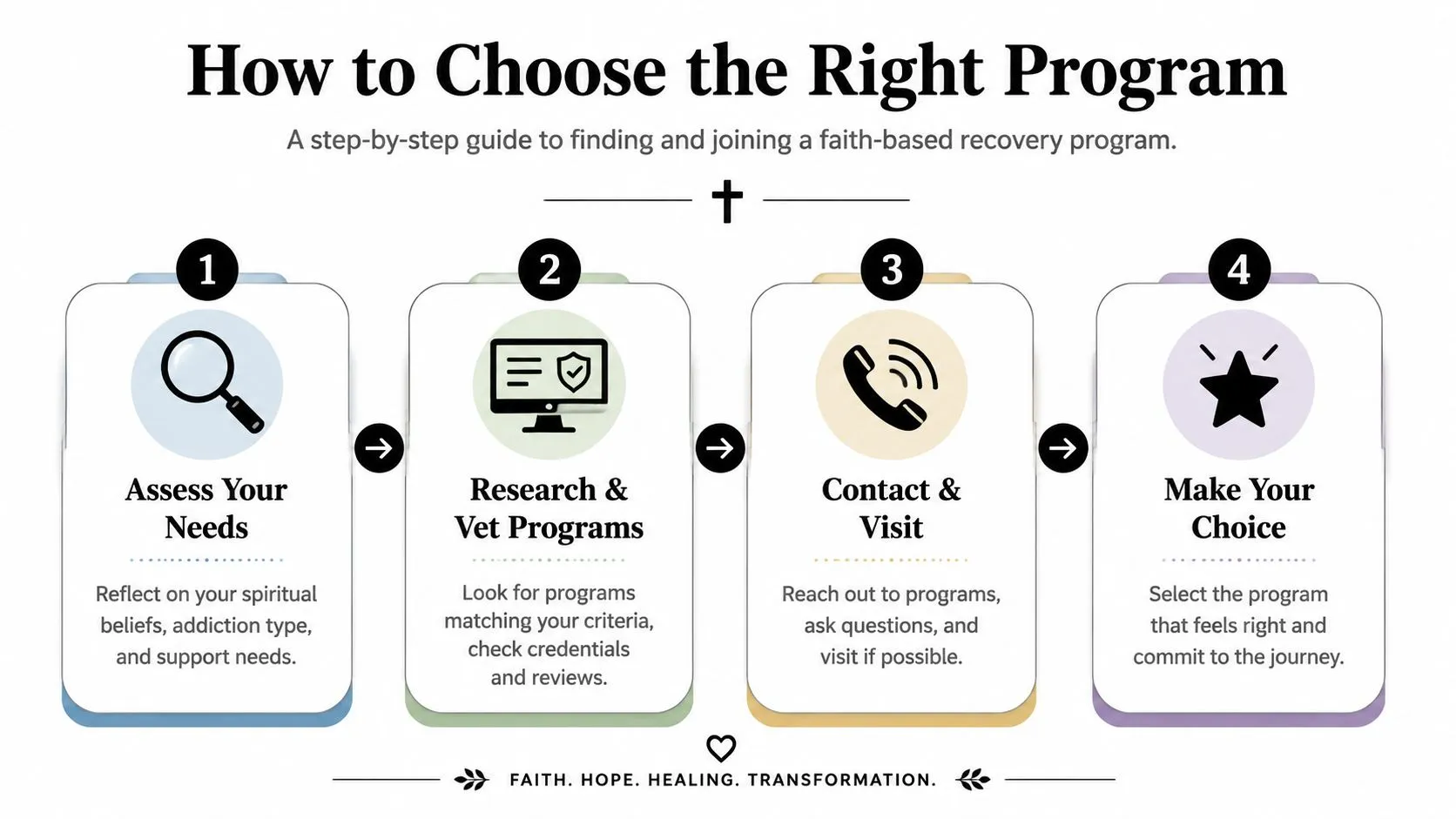
- How to Choose the Right Program for You
- How Your Church and Partners Can Help
- Using Tech to Strengthen Your Recovery
- Your Next Step Is About Grace Not Perfection
What Are Faith Based Recovery Programs
When willpower keeps failing, people often assume they’re weak. Usually, that’s the wrong diagnosis. Most addiction patterns don’t break because of one strong decision. They break when a person gets support, structure, and a new way to live.
Faith based recovery programs are structured recovery systems that treat spiritual life as part of healing, not an extra feature. They may include prayer, confession, Scripture, worship, or spiritual mentorship. But healthy programs also deal with routines, triggers, relationships, relapse patterns, and daily accountability.

A workshop not just a lecture
A good way to think about it is this. A lecture tells you what’s true. A workshop helps you practice it.
That difference matters. Many people already know the right verses, the right morals, and the right answers. Knowledge alone hasn’t changed the pattern. A strong faith based program gives you places to be, people to call, steps to follow, and honest ways to respond when temptation hits.
Practical rule: If a program only tells you to pray harder, it may inspire you for a few days, but it probably won’t carry you through the next real trigger.
What these programs are and are not
They are often built around a few core pieces:
- Spiritual grounding: A clear belief that recovery involves more than behavior change.
- Community support: Regular meetings, peers, sponsors, mentors, or leaders who know your story.
- Accountability: Honest check-ins about slips, cravings, and choices.
- Practical action: Clear habits that help you avoid old patterns and build new ones.
They are not just church attendance. They are not a sermon with a recovery label. And they are not effective when they use shame as the main tool.
Some programs are tightly connected to one faith tradition. Others are spiritually open while still taking spiritual change seriously. The common thread is simple. They help people stop fighting alone.
Common Models of Faith Based Recovery
Individuals typically encounter two broad models first. Knowing the difference helps you choose a room where you can be honest.
Spirituality already has a place in many recovery settings. That does not mean faith replaces treatment. It means prayer, community, meaning, and spiritual practice can sit alongside behavioral support and appropriate clinical care. SAMHSA’s faith-based and community engagement resources describe faith communities as potential partners in prevention, treatment support, and recovery.
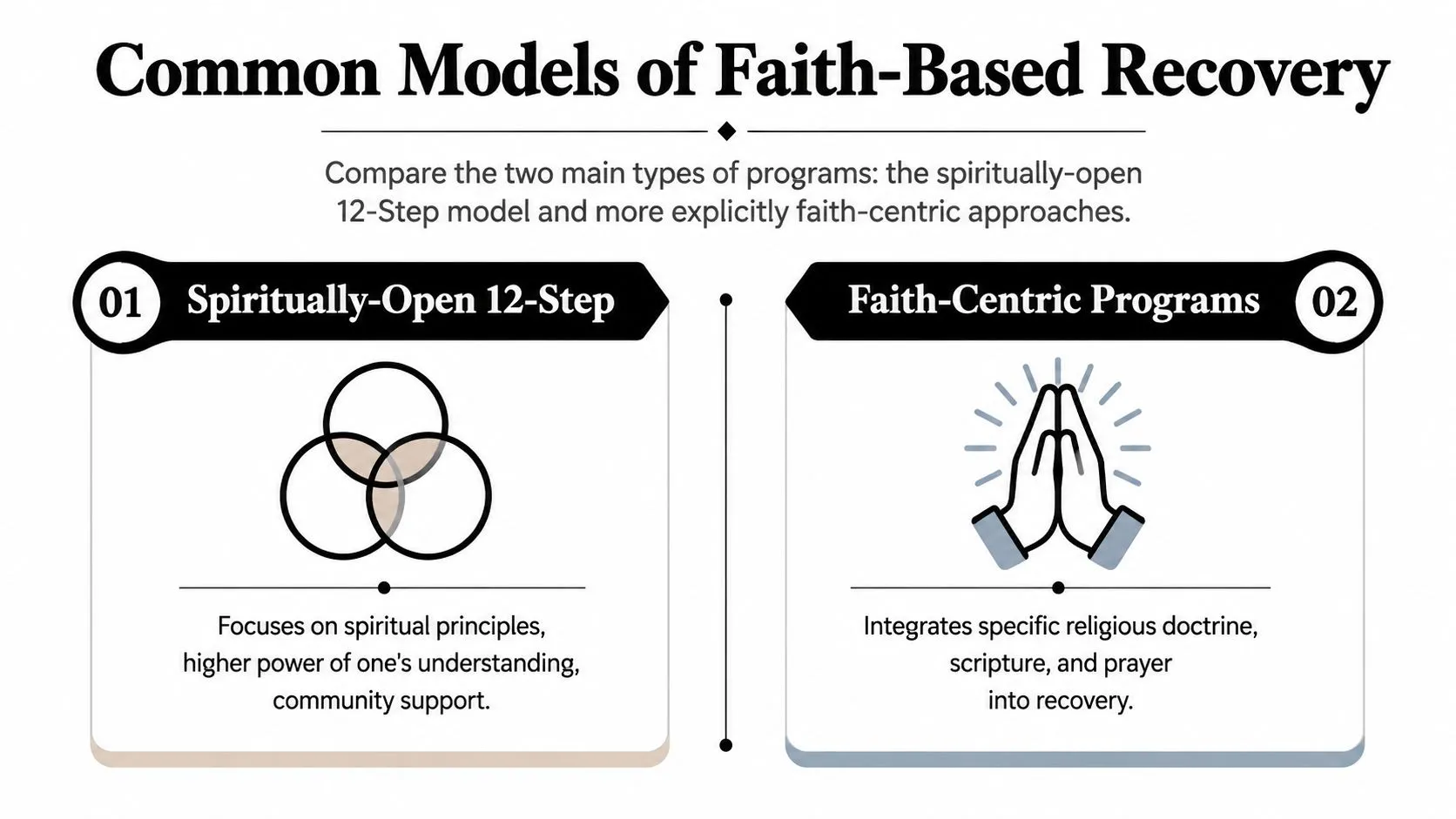
Spiritually open 12 Step groups
Groups like Alcoholics Anonymous and Sexaholics Anonymous use spiritual language, but they don’t require one specific denomination. The phrase “Higher Power” gives people room to engage even if they’re still sorting out what they believe.
That flexibility helps some people stay in the room long enough to become honest. It also lowers the pressure for people who carry church hurt, confusion, or fear of being judged by religious insiders.
In practice, these meetings often focus on:
- Admitting powerlessness: Facing reality instead of managing appearances.
- Personal inventory: Naming patterns, resentments, and damage done.
- Confession and amends: Repairing what can be repaired.
- Peer sponsorship: Learning from someone further down the road.
Christ centered programs
Christ centered programs are more direct. They tie recovery to Christian teaching, prayer, Scripture, repentance, grace, and discipleship. Celebrate Recovery is the model many churches know best.
For some people, this feels like home. They don’t want a vague spiritual path. They want recovery language that clearly names sin, grace, forgiveness, and obedience. That can be powerful when it’s handled with humility.
But clarity can turn unhealthy if leaders confuse biblical authority with personal control. A Christ centered room should still make space for honesty, process, and weakness.
Side by side differences
| Model | Core strength | Common challenge | Best fit for |
|---|---|---|---|
| Spiritually open 12 Step | Broad access and strong peer process | May feel too general for some Christians | People needing a simple, proven meeting culture |
| Christ centered | Strong alignment with Christian belief and language | Can drift into moral pressure if led poorly | People who want faith named clearly in recovery |
Some people do best with both. They attend a 12 Step meeting for peer honesty and a church-based recovery group for spiritual grounding.
The right choice often comes down to one question. Where are you most likely to tell the truth and keep showing up?
Signs of a Healthy Faith Based Program
Not every faith based program is safe. Some help people heal. Some just make them quieter, more ashamed, and harder to read. You need to know the difference before you hand over trust.
This checklist helps.
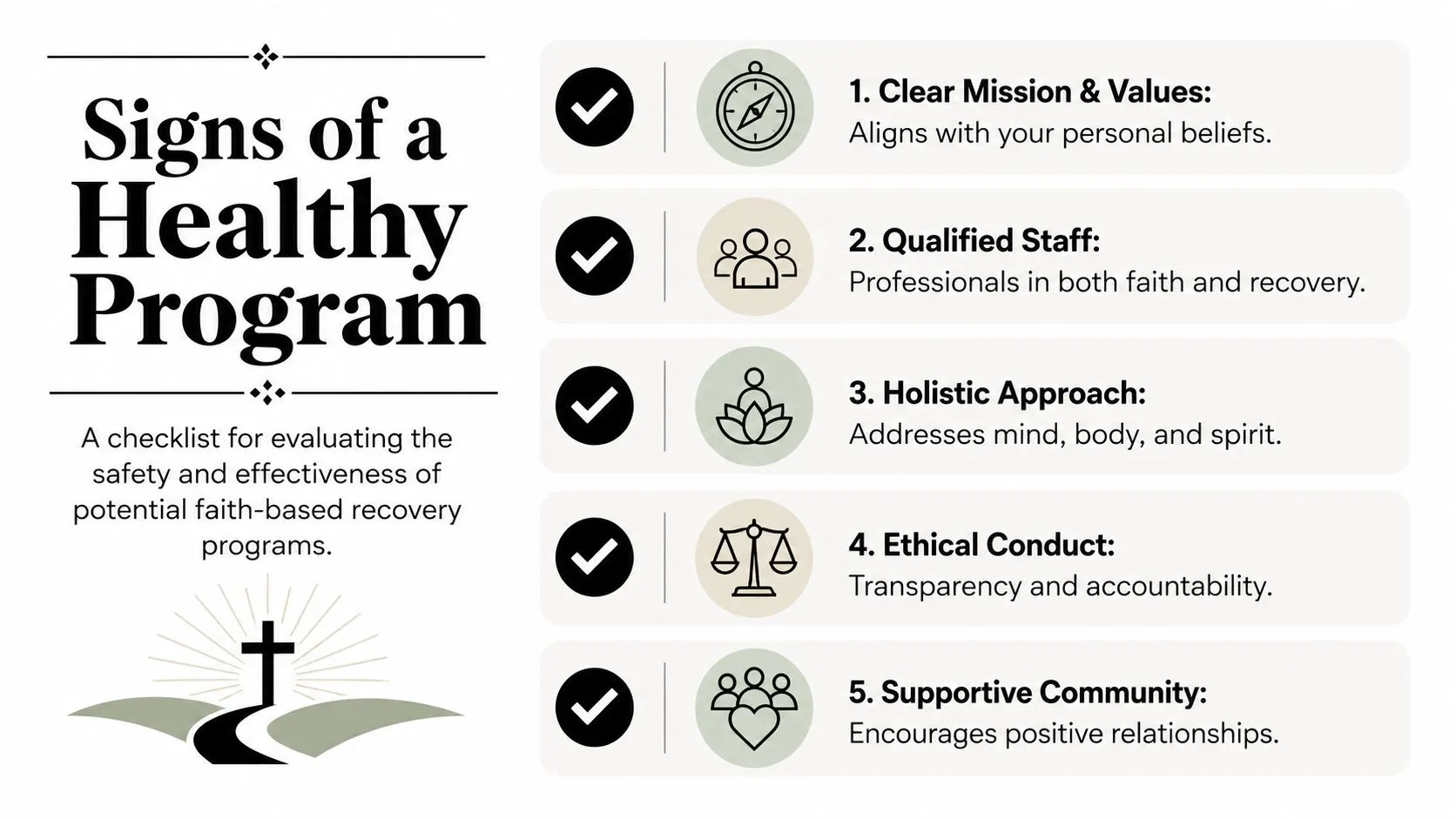
Green flags worth looking for
A healthy program usually has calm leadership. Leaders don’t need to dominate the room. They listen, set boundaries, and stay teachable.
Look for these signs:
- Grace over theatrics: People can admit failure without being humiliated.
- Clear confidentiality: The group explains what stays private and what must be reported.
- Defined leadership: You can tell who leads, who supervises them, and how concerns are handled.
- Real structure: Meetings are regular. Expectations are clear. Follow-up happens.
- Clinical humility: Leaders know when a person needs therapy, medical care, or psychiatric support.
A key test is whether the program can deal with more than addiction alone. Strong programs either include qualified clinical support or make appropriate referrals when trauma, depression, anxiety, substance use, or another condition needs professional care.
Here’s a helpful overview to watch as you evaluate options.
Red flags you should not ignore
Some warning signs show up early. Others hide behind polished spiritual language.
Pay attention if you see any of these:
- Control dressed up as discipleship: Leaders pressure people to obey them in areas that go beyond recovery care.
- Isolation: A group discourages outside counsel, therapy, family contact, or second opinions.
- Money pressure: Donations, fees, or “special opportunities” become a constant push.
- Shame as strategy: People are motivated mainly through fear, guilt, and public exposure.
- No path for crisis care: Serious mental health issues are minimized, spiritualized, or treated as simple lack of faith.
The strongest groups don’t pretend that addiction is only spiritual. They understand that temptation can involve trauma, anxiety, loneliness, habit loops, secrecy, and access. Faith matters. So do good boundaries and skilled care.
How to Choose the Right Program for You
Choice gets easier when you stop asking, “Which program is perfect?” and start asking, “Which program fits what I need right now?”
There is more help available than many people realize, but the words “faith-based” do not guarantee that a program is safe, qualified, or effective. Evaluate the actual leadership, methods, safeguards, and referral network instead of relying on the label.
Start with your actual needs
Before you visit a group, get honest about the basics.
Ask yourself:
- What am I trying to recover from? Alcohol, drugs, porn, sex, gambling, or a wider pattern of compulsive behavior?
- What kind of setting helps me open up? Church-based, peer-led, residential, one-on-one, online, or mixed?
- Do I need more than a meeting? Therapy, trauma support, medical evaluation, marriage help, or psychiatric care?
- What kind of faith language helps me engage? Broad spiritual language or explicit Christian teaching?
Those answers narrow the field fast.
Visit before you commit
Your first meeting is not a marriage. It’s an observation.
Watch what happens in the room. Notice whether people speak candidly or just say polished things. Notice whether leaders take over every conversation. Notice whether members talk about growth in practical terms or only in vague spiritual language.
A useful way to assess a group is to ask simple questions after the meeting:
- How do you handle relapse?
- What support exists between meetings?
- How do you respond when someone needs therapy or mental health care?
- What does accountability look like here?
- Are newcomers pressured to share before they’re ready?
Use fit not hype
Some programs sound impressive but don’t match your stage of recovery. Others look ordinary and become life changing because the culture is steady and honest.
Use this quick screen:
| If you need | Look for |
|---|---|
| Daily accountability | Check-ins, partner support, clear follow-up |
| Strong Christian teaching | Scripture-based curriculum and mature leaders |
| Lower entry pressure | Open meetings and simple first-step process |
| Help for complex issues | Referral pathways and respect for clinical care |
The best program is often the one you’ll still attend when your emotions drop and your excuses get loud.
If one group doesn’t fit, don’t take that as proof that recovery won’t work. It only means that room wasn’t your room.
How Your Church and Partners Can Help
People rarely heal well under surveillance. They heal in relationships that mix truth, patience, and consistency.
That matters for spouses, pastors, friends, small-group leaders, and accountability partners. If you’re supporting someone, your job isn’t to become their detective. It’s to help them live in the light and keep moving when they want to hide.
What support should look like
Healthy support has backbone. It also has restraint.
For churches and partners, the basics are simple:
- Stay honest about limits: You can support recovery without pretending you’re a therapist.
- Ask direct questions: “How was this week?” is fine. “What happened before the urge?” is often better.
- Reward honesty: If someone tells the truth quickly, don’t punish the disclosure.
- Focus on patterns: Look at isolation, stress, secrecy, and access points, not only the final behavior.
If your church team needs a clearer framework, this article on why accountability works better than white-knuckling gives a practical picture of support that helps instead of controlling.
What support should not become
Support goes wrong when helpers try to carry the whole recovery on their back. That usually leads to resentment, secrecy, and burnout.
Avoid these mistakes:
- Policing every move: Constant checking can make a person more hidden, not more honest.
- Confusing shame with conviction: Shame says the person is the problem. Conviction deals with the behavior and points toward change.
- Making one person the whole plan: A spouse or pastor should not be the only support system.
- Expecting instant trust restoration: Trust usually rebuilds through repeated honesty and changed habits.
For the person in recovery, ask for specific help. Don’t just say, “Keep me accountable.” Say what that means. A weekly call. A text at night. A check-in after travel. Prayer before a hard day.
That kind of clarity helps everyone.
Using Tech to Strengthen Your Recovery
Technology can fuel addiction. It can also help interrupt it.
For people dealing with porn, late-night acting out, or digital secrecy, faith alone isn’t the problem. Isolation and easy access are. That’s why smart recovery plans use spiritual commitment with practical barriers.
The point is not “just believe harder.” Faith is most useful here as part of a wider recovery structure: honest community, clear boundaries, repeatable habits, and qualified care when it is needed.
Why guardrails matter
An urge often has a short window. In that window, small barriers matter.
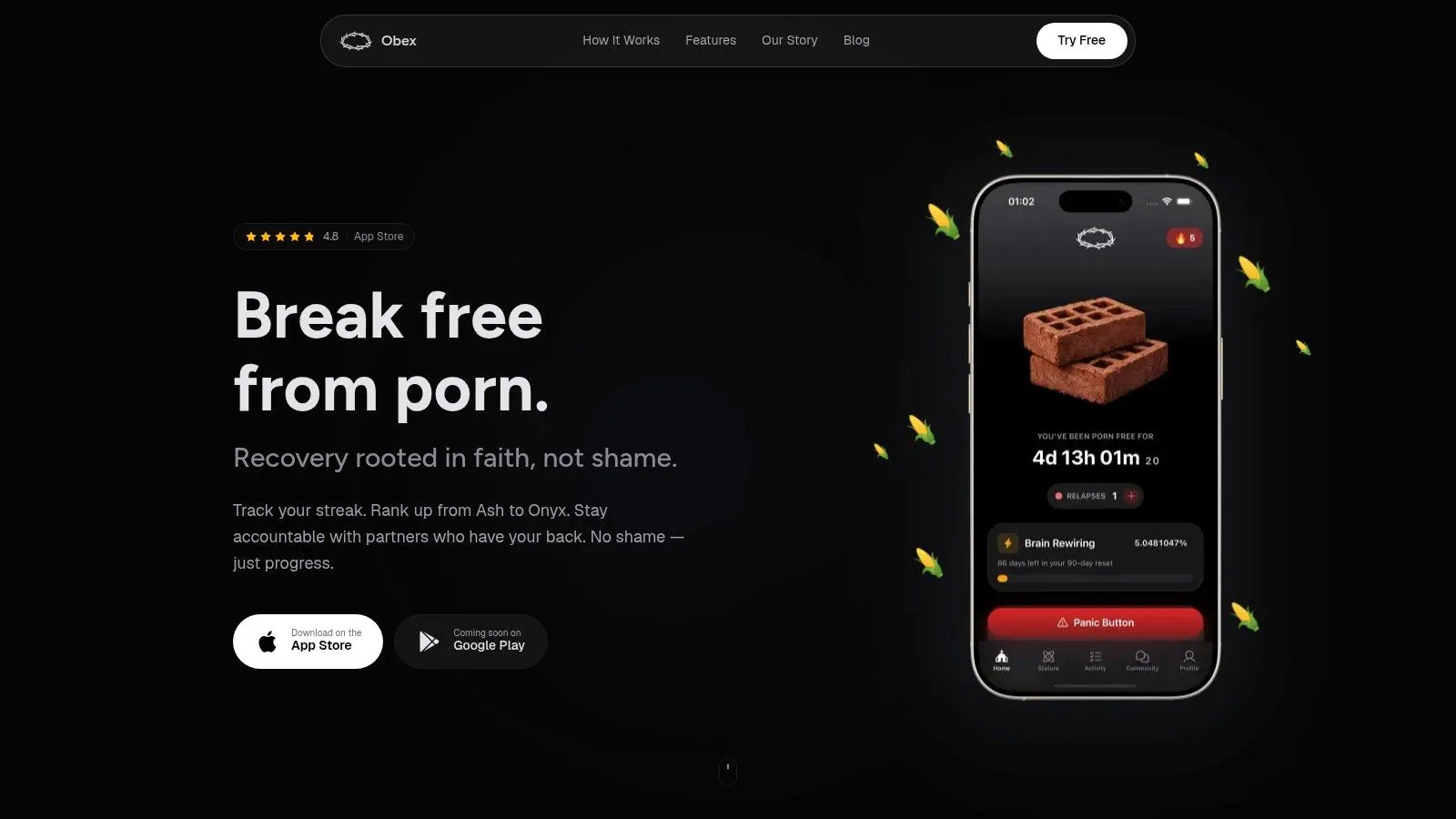
That’s where tech helps:
- Blockers create friction: They slow down the move from urge to action.
- Tracking apps expose drift: You see patterns before they become a blow-up.
- Accountability tools shorten secrecy: A struggle gets shared sooner.
- Emergency tools interrupt autopilot: They give you another action to take while your brain is flooded.
How to use tech without becoming dependent on it
Tools work best when they support a real plan. They don’t replace repentance, community, or honesty. They strengthen them.
A strong setup usually includes a few layers:
- Filtering or blocking on primary devices: Especially the devices and times tied to old patterns.
- Daily check-in habits: Not just when you fail, but while you’re staying steady.
- Shared visibility with trusted support: Limited, appropriate, and clear.
- Response plans for urges: A preset sequence like leave the room, text a partner, pray, walk, and reset.
If you’re comparing digital support options, this roundup of best porn addiction apps can help you think through what kind of features fit your situation.
Faith and technology are not enemies in recovery. Wisdom often looks like prayer plus planning.
When someone says, “If I needed a blocker, I guess my faith isn’t strong enough,” they usually have it backward. Building a wise environment is often one of the clearest signs that a person is taking recovery seriously.
Your Next Step Is About Grace Not Perfection
Many people delay recovery because they want to start strong. They want the perfect plan, the perfect streak, the perfect comeback story. That mindset traps people.
Recovery usually begins smaller than that. One honest conversation. One meeting. One blocker. One confession made sooner than last time. One night handled differently.
Progress changes more than pressure
Pressure can produce short bursts. Grace produces return. And return matters, because individuals in recovery will have moments when they feel discouraged, exposed, or tired of starting again.
What helps in those moments is not pretending the fall didn’t matter. It’s refusing to let the fall become your identity.
A healthier mindset sounds more like this:
- Tell the truth fast: Don’t build a second problem through hiding.
- Study the moment: What led up to it? Fatigue, anger, loneliness, boredom, travel?
- Tighten the plan: Add structure where the crack showed up.
- Receive grace and keep moving: Shame stalls people. Grace gets them back on the road.
Take one concrete step today
Don’t aim for a dramatic overhaul by tonight. Aim for movement.
You could:
- Message one trusted person and say you need support.
- Attend one meeting this week, even if you feel awkward.
- Remove one access point that keeps feeding the cycle.
- Read something practical on how to overcome temptation and turn one idea into action.
Recovery doesn’t ask you to be flawless. It asks you to stop hiding and keep responding to grace.
If you’ve been waiting until you “mean it enough,” stop waiting. The better move is to build a system that helps you act even on the days when your feelings lag behind your values.
For a concrete next step, pair this overview with Bible verses for porn addiction and the practical guide to Christian sexual self-control.
If you want a practical, faith-rooted tool for porn recovery, Obex is built for that daily fight. It combines streak tracking, accountability partners, panic support, scripture-based encouragement, and a free desktop blocker so you can put structure around your recovery instead of relying on willpower alone.