Porn Addiction Recovery: A Faith-Informed Roadmap

Luca
Updated · 17 min read

Maybe it’s late, and you just broke another promise to stop. You cleared your history, told yourself that was the last time, prayed about it, felt sick about it, and then went back to trying to fix the whole thing on your own. That cycle wears you down fast, and a lot of the weight comes from the shame and the secrecy, plus the feeling that you should have beaten this by now.
That’s really common, and it doesn’t mean you don’t want freedom badly enough. Porn addiction recovery works way better as a plan you build with other people over months than as a private test of willpower, and that longer road is what this roadmap covers. If you’re after what to set up today, like blockers on your phone and Mac and an urge plan, how to quit porn addiction is the place to start, and this one picks up from there.
Nobody can honestly give you a universal timeline, because it depends on how deep the pattern goes, the support around you, other mental health stuff you might be dealing with, and what you change day to day. So this is the roadmap: getting honest about your pattern, a plan for your worst hour, who to tell, what to do with urges and relapses, when to bring in a counselor, and how your wife, friends or pastor can help without turning into detectives.
Why trying harder keeps failing
A lot of guys start the same way. You make a serious promise, tighten up for a few days, avoid a couple of triggers, and then stress hits, or loneliness, or boredom, and the old path is still right there, fast and familiar and private.
It’s easy to read that as “I didn’t want freedom badly enough.” Usually the bigger issue is that you brought determination to what’s really a systems problem, and tried to fight a habit you repeat every week with emotion alone.
Things usually start to move once shame stops making the decisions. Shame pushes you to hide it and make another big promise. What works better is telling God and one other person the truth, and then taking one small next step.
What early recovery looks like
Early recovery is pretty unexciting. Better sleep, fewer private loopholes, more honesty, less time alone with a screen when you’re vulnerable, and a faster response when an urge shows up. Those small changes matter because they change the conditions the cycle needs to keep going.
It also helps to drop the idea that you have to sort out your whole life this week. For now the goal is to stop treating this like a secret fight you have to win alone. You’ll probably start before you feel confident, and that’s normal. You might still feel fragile or embarrassed or unsure, and you can start anyway.
Step 1: Get honest about what’s going on
Before you can build a plan, you need a clear read on what’s happening. This part is between you and a piece of paper (or your notes app), and the goal is to see your own pattern clearly. Write your answers down:
- Loss of control: Have you tried to stop or cut back, then gone back to it anyway?
- Secrecy: Do you hide devices, clear history, lie, or keep parts of your life fenced off?
- Escalation: Do you need more novelty, more intensity, or more time than you used to?
- Emotional dependence: Do you reach for porn when you’re stressed, lonely, angry, numb, or discouraged?
- Relational damage: Has this hurt trust, intimacy, focus, spiritual life, or daily responsibilities?
If you want something more guided, the porn addiction test helps you sort out whether you’re mostly dealing with loss of control, guilt, or both, before you talk to someone.
What your answers are telling you
One “yes” on its own doesn’t tell you much, so look at the overall pattern. If several of those hit hard, you’re probably dealing with a loop more than a desire problem: something triggers you, you act, you get relief for a moment, and then the regret pushes you into more hiding. Knowing which loop you’re in changes what you do about it:
| What you notice | What it usually means |
|---|---|
| You use porn mostly when tired or stressed | Your habit is tied to how you handle stress |
| You keep finding loopholes around your own rules | Your plan is too vague or too private |
| You can stop briefly but not keep momentum | You need support and replacement habits |
| You feel crushed after every slip | Shame is taking energy that should go into repair |
If you’re helping someone else through this, don’t push these questions on them in the middle of an argument. Ask at a calm time, and ask better questions. “What situations pull you in most?” goes a lot further than “how bad is it?”
Step 2: Build a plan for your worst hour
Saturday night, everyone else is asleep, your phone’s in your hand, your guard is down, and the plan you made on a calm afternoon suddenly feels pretty weak. That’s why a lot of recovery plans fail: they’re built for your best hour instead of your most vulnerable one.
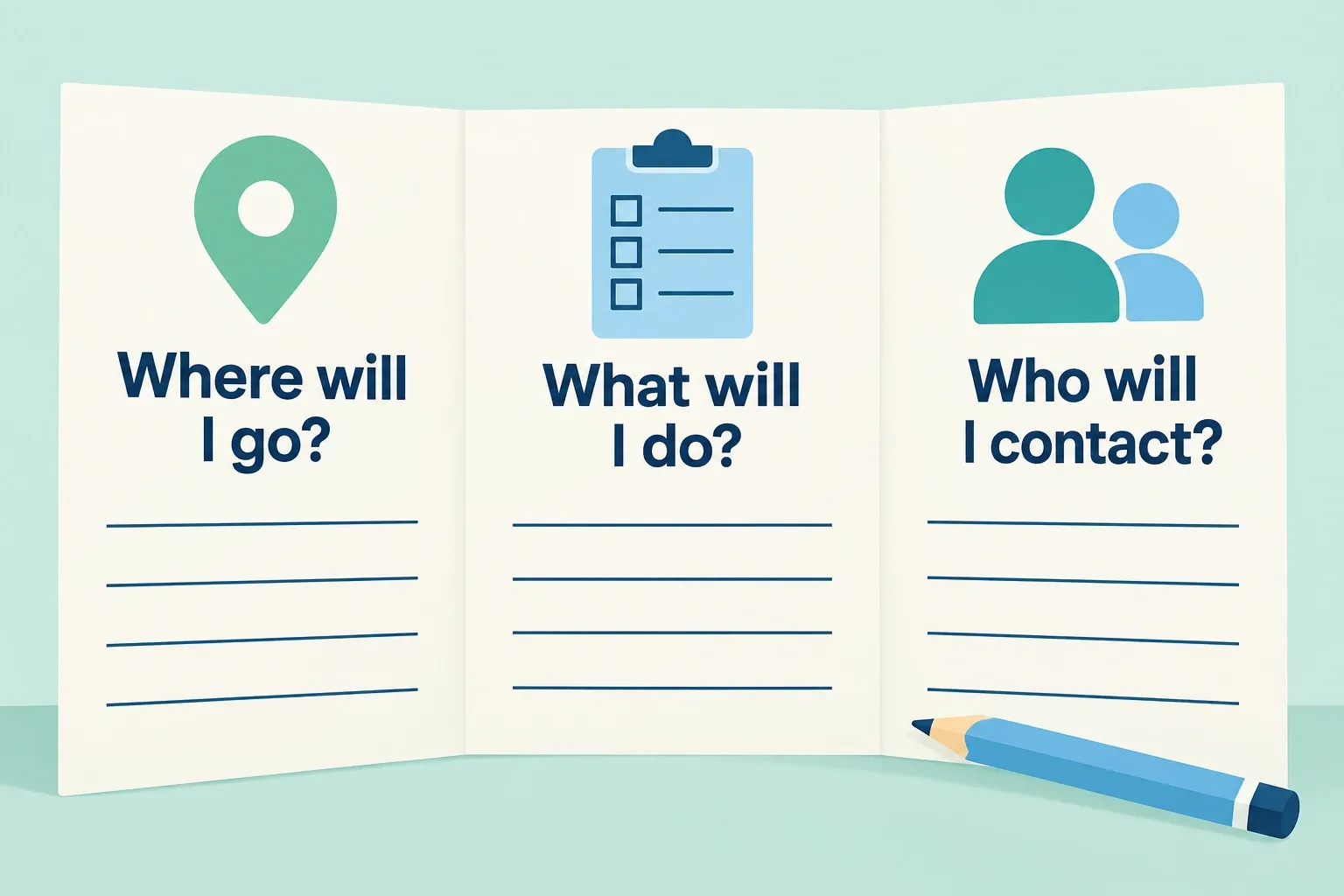
A plan that works is written down, specific, and something you can repeat. It should tell you, and anyone supporting you, what happens before, during and after a hard moment.
Start with a reason that holds up under pressure
Guilt fades fast once stress, anger, loneliness or exhaustion show up, so you need a reason that’s still there when they do. Write one short paragraph answering this question: why do I want freedom, and who is affected if I stay stuck?
Keep it concrete. Maybe you want to rebuild trust with your wife, or you want your private life and your faith to match, or you’re just tired of hiding from the people who love you. If a partner, pastor or mentor is part of your support, let them read it, so they know what you’re fighting for and can call you back to it when your thinking gets foggy.
Map the chain that leads to it
Porn use usually follows the same sequence, and the more clearly you can name it, the faster you can interrupt it. Use four columns:
| Situation | Feeling | Thought | Action |
|---|---|---|---|
| Late at night with phone | Tired and lonely | “Just for a minute” | Scroll, search, isolate |
| After conflict | Angry and rejected | “I deserve relief” | Withdraw and act out |
| Unstructured weekend time | Bored | “I’ve got time” | Drift into old habits |
The map shows you where to step in. Some guys need to deal with being exhausted first, and others need help with conflict, boredom or secrecy. A spouse or support person can use the map too, and it gives them better questions to ask than “did you mess up again?” Porn addiction triggers and the routine that breaks the loop goes deeper on finding yours.
Set rules that are clear enough to follow
Good boundaries cut down on access and on improvising in the moment, and they make support easier because everyone knows the plan. A short checklist:
- Devices: Keep screens out of the bathroom and out of bed.
- Apps: Delete platforms that regularly lead to searching, messaging, or spiraling.
- Timing: Set a firm cutoff for solo screen time at night.
- Environment: Work and rest in visible places when possible.
- Money and privacy: Remove private subscriptions or hidden payment methods tied to acting out.
This part usually feels restrictive, and pushing back on it is a normal reaction. Early recovery usually needs less freedom with your devices, though, and that’s ok for a season.
Decide what happens when the urge hits
A lot of plans get vague right at the worst moment, and “try harder” doesn’t tell you what to do. You need a short sequence you can follow without much thinking, so pick replacement actions for your high-risk windows:
- For stress: Walk, journal, pray, call someone, do pushups, take a shower.
- For boredom: Read, cook, clean, work on a project, leave the house.
- For loneliness: Sit near people, text a friend, join a group, stop isolating.
- For nighttime drift: Charge your phone outside the room and go to sleep earlier.
Pick things you’ll realistically do when you’re tired, irritated and tempted. Then decide who does what. You need to know your first three steps, and the person supporting you needs to know when to check in, how to respond, and what kind of honesty you’ve agreed on after a slip.
Save your worst-hour plan on your phone: where you’ll go, what you’ll do instead, and who you’ll text.
The plan works a lot better once one other person knows about it, which is the next step.
Step 3: Tell one person
Some guys want to recover without anyone ever knowing, and that almost always keeps the struggle alive, because the habit grows in privacy. This is the step people put off the longest, and it’s also one of the ones that changes things fastest.
Don’t pick someone who only panics, lectures, or demands constant reports without any compassion. Pick someone steady, honest and mature, who’s calm enough to hear the truth without turning it into a big scene. If you don’t know what to say, something like this works:
“”“I’ve been trying to stop porn on my own, and I haven’t done well alone. I need support, and more promises won’t do it. Can I tell you what the pattern looks like and ask you to help me stick to a plan?”
If you’re the partner, pastor or friend on the other end, your first response matters a lot. Don’t rush into ten questions. Start by being steady:
- Lead with safety: “Thank you for telling me.”
- Ask for the pattern: “When are you most vulnerable?”
- Ask for the plan: “What boundaries are you willing to put in place this week?”
- Set the next contact: “Let’s talk again on a specific day.”
Support works best when it’s regular and predictable: a quick daily check-in (even one text) plus a longer conversation once a week. A random “how are you doing?” once in a while isn’t enough, so put the weekly one on the calendar. If you need a way to explain why this works better than willpower, why accountability works better than going it alone lays it out.
Step 4: Handle urges and relapses
You’re going to keep getting urges for a while, and that’s what recovery looks like in real life. The old habit is still there, and your job is to interrupt it quickly, before it takes over.
In the moment
When an urge spikes, don’t sit still and negotiate with it. Move, and move fast:
- Move your body: Stand up, leave the room, step outside, or get near other people.
- Change the device situation: Put the phone away, shut the laptop, or hand the device to someone else for a while.
- Interrupt the fantasy early: Say out loud what’s happening. Saying it makes it easier to snap out of it.
- Contact support: Send a short message such as, “I’m getting pulled right now. I need a check-in.”
- Switch to a preset activity: Walk, shower, clean, pray, exercise, or do one task with your hands.
A lot of people find an urge eases within about 10–15 minutes of doing something else, so you’re only trying to get through the next few minutes. It also helps to read a practical guide on how to overcome temptation ahead of time, so you have a script ready before the next hard night.
If you relapse
A relapse is serious, and it’s not something to shrug off. It also doesn’t prove that all your earlier progress was fake, and it shouldn’t turn into an excuse to keep going. Panicking and hating yourself just wastes the moment, so treat what happened as information and get back to the plan quickly:
- Tell the truth quickly. Report it to the right person without spinning the story. Short, clear, honest.
- Trace it back. Look at what happened before the relapse, further back than the minute before: the day, the mood, the isolation, the loophole.
- Change one thing today. Add one tighter boundary right away, before “someday” talks you out of it.
A relapse review can look like this:
| Question | Example answer |
|---|---|
| What opened the door | Stayed up late with phone after conflict |
| What warning sign I ignored | Felt angry and wanted escape |
| What I will change now | Phone charges in kitchen tonight |
If the “I already blew it, might as well keep going” thought is the part that gets you, it has a name, the abstinence violation effect, and what to do in the first 24 hours after a relapse has the step-by-step for that night.
Be kind to yourself here, in the honest way, which means facing the relapse directly, learning from it, and getting back into the plan without a big scene. Proverbs says “a righteous man falls seven times, and rises up again” (Proverbs 24:16, WEB), so confess it and get back up.
When to bring in a counselor
Sometimes your own discipline and support from friends aren’t enough. Get licensed counseling or therapy if any of these are true:
- You keep returning to porn after putting real safeguards in place
- Porn use is tangled up with trauma, anxiety, depression, or intense shame
- Your relationship has been damaged enough that trust and communication need repair
- You can’t stay honest for long without outside pressure
- The pattern is growing in secrecy, frequency, intensity, or consequences
A lot of people wait too long because they think getting outside help means they failed. Usually it means they’re finally treating the problem at the right level. A good counselor can help you figure out what drives the pattern, teach you better ways to handle stress and urges, and give your support team clearer roles. “Porn addiction” isn’t a formal diagnosis, but the WHO’s ICD-11 includes compulsive sexual behaviour disorder, and a counselor who works with it is a good person to look for.
If depression is part of the picture and you’re having thoughts of suicide, call or text 988 in the US (988 Suicide & Crisis Lifeline) or your local emergency number right now. And if you’re already getting treatment for depression or anxiety, keep going with it. Working on porn can be part of getting better, but it doesn’t replace treatment.
For spouses, friends and church leaders
He says he wants to change. His wife wants to believe him, and his pastor wants to help. Then the week gets hard, nobody knows what to ask, and every conversation turns into either an interrogation or silence.
That’s why recovery works better as a team effort than a private promise. The person struggling has to do the hard work of honesty and change, and the people around him need a clear role too. Support helps when it adds structure, tells the truth, and protects his dignity. If you’re his wife, my husband watches porn is written for you specifically.
What healthy accountability looks like
Healthy accountability has a shape: check-ins you’ve agreed on, specific questions, and a clear response when something goes wrong. Supporters don’t have to monitor every minute. The job is making secrecy harder and honesty easier.
This comparison usually helps:
| Unhelpful approach | Better approach |
|---|---|
| “Did you relapse again?” | “How are you doing with your recovery plan?” |
| “Why can’t you just stop?” | “What situations have been hardest this week?” |
| “Tell me every detail” | “Tell me what I need to know to support honesty and safety” |
| Random emotional check-ins | Scheduled check-ins with agreed questions |
That third row is for friends and pastors, and it comes with a caveat if you’re his wife. Wanting the truth about your own marriage is legitimate, and asking for it isn’t interrogating him. A full disclosure is usually best done once, with a counselor helping you both through it, rather than coming out in bits during late-night fights over months.
Keep it concrete, and ask about patterns, what he did, who he reached out to, and what needs to change:
- Ask about patterns: “When were you most vulnerable this week?”
- Ask about action: “What boundary helped? Which one failed?”
- Ask about support: “Who did you contact when things got hard?”
- Ask about repair: “What needs to change before the next high-risk moment?”
Calm, specific questions make honesty easier for him, but being honest is still his job, whatever your reaction.
Supporters need limits too. You can require honesty, set boundaries for the relationship, the home or the ministry, and respond firmly when trust is broken, but you can’t carry someone else’s recovery on your back, and trying to usually leaves one person resentful and the other passive. Too little structure keeps everyone guessing, and too much control turns the relationship into a policing system, so aim for the middle: clear expectations, regular check-ins, and consequences you’ve named ahead of time.
If you’re his wife and you ever feel unsafe, threatened, controlled, or pressured into sex, that’s beyond what a recovery plan can fix. Contact the National Domestic Violence Hotline (US: 1-800-799-7233, or text START to 88788) or emergency services. And if you ever find sexual content involving anyone under 18, it has to be reported (in the US, to the NCMEC CyberTipline), not handled privately.
For church leaders
Church leaders often join the support team after months or years of secrecy, and the first conversation matters a lot. A harsh or panicked reaction can push the person deeper into hiding, and a soft, vague one can leave everyone stuck.
A good church response usually includes a few basic moves:
- Protect confidentiality: Guard the person’s dignity and don’t widen the circle without a clear reason.
- Name the problem plainly: Call sin and deception what they are, without turning shame into a tool.
- Give next steps: Point the person toward counseling, accountability, and concrete restrictions.
- Follow up consistently: One intense meeting rarely changes entrenched patterns.
- Care for affected people too: A spouse or family member may need their own support, boundaries, and pastoral care.
Church leaders help most when they avoid two extremes. One is public exposure dressed up as being serious about sin. The other is spiritual language with no plan attached, because “pray more” on its own isn’t a recovery strategy.
Build a small support team instead: maybe a spouse, one mature accountability partner, a counselor, and a pastor. Not everyone needs the same information, but everyone involved should know their role, so the person in recovery isn’t left alone and the people around him aren’t left guessing.
What the next year looks like
A year from now, the goal is a different life more than a perfect streak: less room for secrecy, urges that have lost some of their pull, and people around you who know how to help instead of waiting for the next crisis.
Recovery usually looks more like steady repair than one big breakthrough, and new habits take longer than people expect. One well-known study found it took a median of 66 days for a new behavior to become automatic, with a range from 18 to 254 days (Lally et al., 2010), so a plan you can live with for months matters more than a burst of motivation for one hard week.
A spouse, accountability partner or church leader needs realistic expectations too. Progress can be real even when it’s messy, and trust can grow back, it just usually grows back slower than anyone’s intentions. So instead of asking “when will I be fixed?”, ask what steady, supported change looks like this week. And when things are going well, keep the habits that got you there, and don’t stop being honest just because it feels easier now.
Where an app fits
Use technology to add friction. Put blockers on every device you use, remove the easy workarounds, and tighten your settings, so drifting into it casually gets a lot harder.
Tools are good at one job, which is interrupting access. They don’t ask why you’re vulnerable, help you work through shame, or rebuild trust after months of secrecy, so that part still needs people: the friend who knows, your pastor, maybe a counselor. A good setup usually includes:
- A blocker: Something that reduces fast access across devices.
- A check-in rhythm: A quick daily check-in with someone you trust, plus a longer conversation once a week.
- An urge plan: A short list of what you’ll do in the worst moments.
- A written routine: Sleep, exercise, work, and downtime that aren’t left to chance.